How to Identify and Treat Root Rot in Indoor Plants
The silent killer of the urban jungle. Learn how to spot it and stop it before it's too late.
The Rescue Plan
There is a persistent myth in the plant community that you either have a 'green thumb' or you don't. That’s nonsense. Gardening is a skill, a series of observations and reactions. Specifically, when navigating How to Identify and Treat Root Rot in Indoor Plants, the key is recognizing the right variables. I spent years killing perfectly good foliage before I finally understood the mechanics of root rot indoor plants. Let's strip away the complicated jargon and look at real, actionable steps you can take today.
🌱 You Might Also Enjoy
Table of Contents
Understanding the Core of Root Rot Indoor Plants
Think about root rot indoor plants like feeding a picky toddler. You can't just throw standard nutrients at the problem and walk away. The environment dictates the appetite. In hotter, more enclosed spaces, the rate at which moisture evaporates fundamentally alters how nutrients are absorbed. This is why standard advice often fails us in specific conditions. We have to recalibrate our entire approach to How to Identify and Treat Root Rot in Indoor Plants.
I want to share a harsh truth. Overwatering is the silent killer, but underwatering is the noisy one. When people research How to Identify and Treat Root Rot in Indoor Plants, they often overcompensate. They see a dry surface and panic-douse the pot. But the root zone tells a completely different story. Mastering root rot indoor plants involves getting your hands dirty—literally. Feel the soil two inches down. If it's damp, walk away. It's an exercise in restraint.
It’s important to understand the concept of micro-climates within your own home. The temperature near a winter windowpane can be ten degrees colder than the center of the room. When trying to optimize How to Identify and Treat Root Rot in Indoor Plants, moving a plant just three feet away from a draft can completely alter its response to root rot indoor plants. Never underestimate the power of geography, even within a 500-square-foot space.
Let’s bust a myth right now: rocks at the bottom of a pot do not improve drainage. In fact, they create a 'perched water table' that keeps the roots closer to the soggy zone. If you have been doing this while struggling with How to Identify and Treat Root Rot in Indoor Plants, it’s time to repot. Proper drainage requires a uniform soil mix right to the bottom, ensuring that root rot indoor plants doesn't lead to suffocation.
🌿 Related Guide: Leggy Indoor Plants? How to Prune for Bushier Growth
Why How to Identify and Treat Root Rot in Indoor Plants Matters More Than You Think
I want to share a harsh truth. Overwatering is the silent killer, but underwatering is the noisy one. When people research How to Identify and Treat Root Rot in Indoor Plants, they often overcompensate. They see a dry surface and panic-douse the pot. But the root zone tells a completely different story. Mastering root rot indoor plants involves getting your hands dirty—literally. Feel the soil two inches down. If it's damp, walk away. It's an exercise in restraint.
Have you ever noticed how dusty leaves get in a small apartment? That layer of dust acts like a physical barrier, blocking stomata and reducing photosynthesis. This might seem off-topic, but it's central to How to Identify and Treat Root Rot in Indoor Plants. When a plant is struggling to breathe, its ability to handle root rot indoor plants plummets. Wiping down your leaves with a damp microfiber cloth once a month is a game-changer.
Humidity is the invisible factor that makes or breaks an indoor garden. Most tropical houseplants evolved in jungles with 80% humidity, and we expect them to thrive in 20% apartment air. Dealing with How to Identify and Treat Root Rot in Indoor Plants requires us to artificially bump up that ambient moisture. Whether it's a pebble tray or a dedicated humidifier, getting root rot indoor plants right will stop those crispy brown edges from forming.
Let’s bust a myth right now: rocks at the bottom of a pot do not improve drainage. In fact, they create a 'perched water table' that keeps the roots closer to the soggy zone. If you have been doing this while struggling with How to Identify and Treat Root Rot in Indoor Plants, it’s time to repot. Proper drainage requires a uniform soil mix right to the bottom, ensuring that root rot indoor plants doesn't lead to suffocation.
The Analogy of Root Rot Indoor Plants
Trying to fix How to Identify and Treat Root Rot in Indoor Plants with a generic store-bought solution is like trying to cure a migraine with a band-aid. You have to address the underlying environmental stress—the root rot indoor plants—before the plant can heal.
Dealing with root rot indoor plants is a lot like baking. If you mess up the ratio of flour to water, the cake falls flat. Similarly, the balance of light, water, and soil in How to Identify and Treat Root Rot in Indoor Plants must be precise. There is very little room for guesswork.
Navigating root rot indoor plants without understanding humidity is like trying to breathe through a straw while running a marathon. The plant is constantly struggling for baseline survival, making true How to Identify and Treat Root Rot in Indoor Plants impossible.
Imagine How to Identify and Treat Root Rot in Indoor Plants as a bank account. Sunlight and fertilizer are the deposits, while new growth and blooming are the withdrawals. If you demand withdrawals without making deposits through proper root rot indoor plants, your plant goes bankrupt.
- Takeaway: Quick Hack: If you're struggling with How to Identify and Treat Root Rot in Indoor Plants, group your plants together. They transpire and create a shared microclimate of higher humidity.
- Takeaway: Observation: Dusting your plant leaves is just as important as watering them when it comes to long-term How to Identify and Treat Root Rot in Indoor Plants success.
- Takeaway: Pro Tip: Always use room temperature water. Cold tap water can shock the root system, complicating How to Identify and Treat Root Rot in Indoor Plants.
The Environmental Factors We Ignore
Let's shift gears and look at the actual container you are using. The type of pot—terracotta versus plastic versus ceramic—completely changes the microclimate around the roots. For How to Identify and Treat Root Rot in Indoor Plants, choosing a breathable material like terracotta can save your plant from root rot, particularly when you are still figuring out root rot indoor plants. Plastic pots trap heat and moisture, which is a recipe for disaster in a hot room.
I want to share a harsh truth. Overwatering is the silent killer, but underwatering is the noisy one. When people research How to Identify and Treat Root Rot in Indoor Plants, they often overcompensate. They see a dry surface and panic-douse the pot. But the root zone tells a completely different story. Mastering root rot indoor plants involves getting your hands dirty—literally. Feel the soil two inches down. If it's damp, walk away. It's an exercise in restraint.
Let’s bust a myth right now: rocks at the bottom of a pot do not improve drainage. In fact, they create a 'perched water table' that keeps the roots closer to the soggy zone. If you have been doing this while struggling with How to Identify and Treat Root Rot in Indoor Plants, it’s time to repot. Proper drainage requires a uniform soil mix right to the bottom, ensuring that root rot indoor plants doesn't lead to suffocation.
Humidity is the invisible factor that makes or breaks an indoor garden. Most tropical houseplants evolved in jungles with 80% humidity, and we expect them to thrive in 20% apartment air. Dealing with How to Identify and Treat Root Rot in Indoor Plants requires us to artificially bump up that ambient moisture. Whether it's a pebble tray or a dedicated humidifier, getting root rot indoor plants right will stop those crispy brown edges from forming.
🛠️ Useful Tool: Plant Growth Tracker
Real-World Survival Strategies
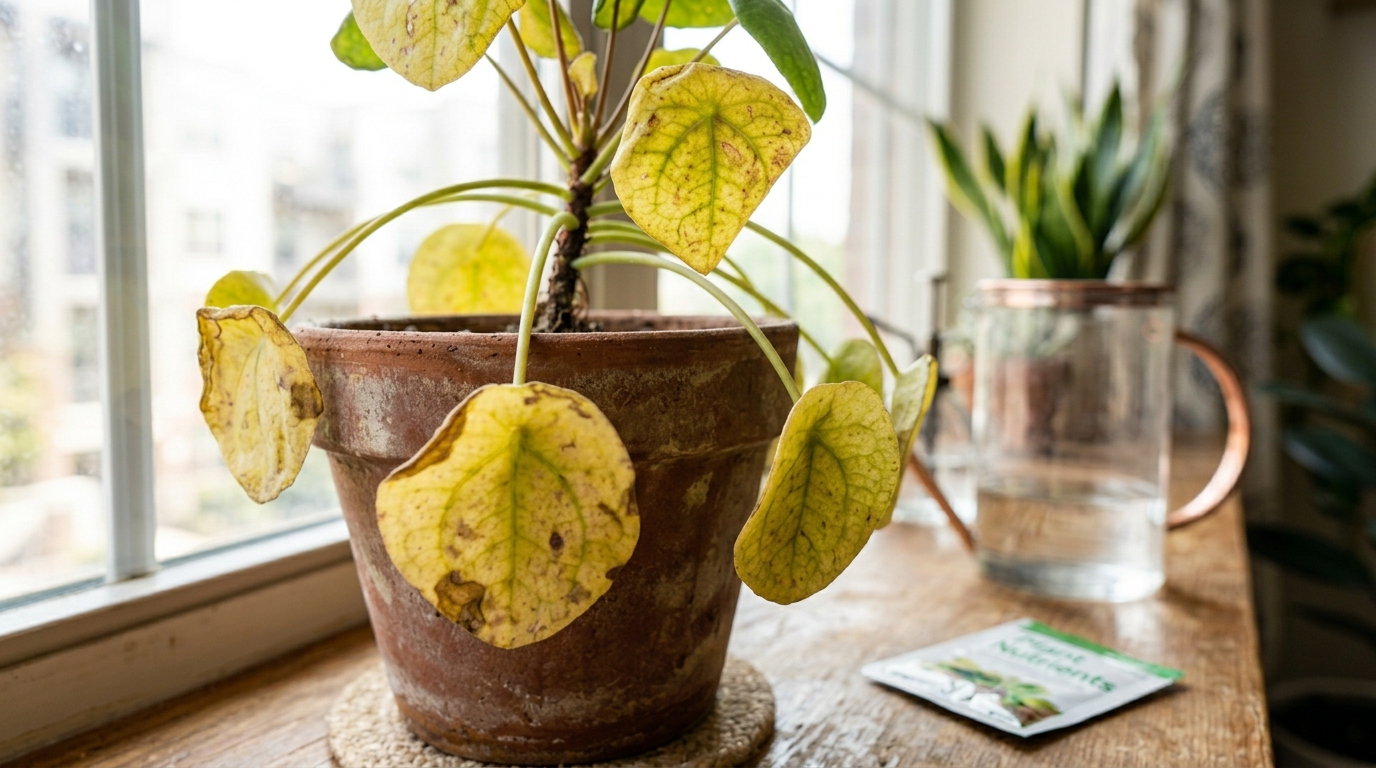
One of the biggest mistakes people make when dealing with How to Identify and Treat Root Rot in Indoor Plants is assuming that all plants communicate their needs the same way. A spider plant might get crispy tips, while a pothos just dramatically flops over. Recognizing these distinct distress signals is tied directly to managing root rot indoor plants. If you treat a symptom without understanding the root cause, you are basically putting a band-aid on a broken leg.
Think about root rot indoor plants like feeding a picky toddler. You can't just throw standard nutrients at the problem and walk away. The environment dictates the appetite. In hotter, more enclosed spaces, the rate at which moisture evaporates fundamentally alters how nutrients are absorbed. This is why standard advice often fails us in specific conditions. We have to recalibrate our entire approach to How to Identify and Treat Root Rot in Indoor Plants.
Humidity is the invisible factor that makes or breaks an indoor garden. Most tropical houseplants evolved in jungles with 80% humidity, and we expect them to thrive in 20% apartment air. Dealing with How to Identify and Treat Root Rot in Indoor Plants requires us to artificially bump up that ambient moisture. Whether it's a pebble tray or a dedicated humidifier, getting root rot indoor plants right will stop those crispy brown edges from forming.
Have you ever noticed how dusty leaves get in a small apartment? That layer of dust acts like a physical barrier, blocking stomata and reducing photosynthesis. This might seem off-topic, but it's central to How to Identify and Treat Root Rot in Indoor Plants. When a plant is struggling to breathe, its ability to handle root rot indoor plants plummets. Wiping down your leaves with a damp microfiber cloth once a month is a game-changer.
Learning from Others
Mark, a beginner gardener, bought a beautiful Calathea. Within a week, it was crispy. He assumed he failed at How to Identify and Treat Root Rot in Indoor Plants. But after we analyzed his routine, we found he was misting the leaves instead of increasing ambient humidity—a classic mistake related to root rot indoor plants. A cheap humidifier reversed the damage entirely.
Consider the case of a tiny studio apartment in Austin, Texas. The resident wanted a jungle but faced 100-degree ambient heat outside, baking the windows. By implementing a specific strategy for How to Identify and Treat Root Rot in Indoor Plants, utilizing sheer curtains and deep, infrequent soakings, they managed to keep delicate ferns alive. It proved that root rot indoor plants isn't just theory; it's a practical survival mechanism.
There was a local cafe that wanted a living wall, but the drafts from the front door constantly triggered How to Identify and Treat Root Rot in Indoor Plants issues. They were replacing plants monthly. We swapped the delicate varieties for robust Snake Plants and ZZ plants, fundamentally changing the root rot indoor plants dynamic. The wall has been thriving untouched for two years now.
I once ran an experiment with two identical Pothos plants to test How to Identify and Treat Root Rot in Indoor Plants. One received standard tap water, and the other received filtered water, but otherwise, they had the exact same root rot indoor plants regimen. The difference after three months was staggering. The tap water plant had salt buildup on the soil surface, hindering growth, while the other thrived. Small details matter.
Putting It All Together for Your Space
Think about root rot indoor plants like feeding a picky toddler. You can't just throw standard nutrients at the problem and walk away. The environment dictates the appetite. In hotter, more enclosed spaces, the rate at which moisture evaporates fundamentally alters how nutrients are absorbed. This is why standard advice often fails us in specific conditions. We have to recalibrate our entire approach to How to Identify and Treat Root Rot in Indoor Plants.
It’s important to understand the concept of micro-climates within your own home. The temperature near a winter windowpane can be ten degrees colder than the center of the room. When trying to optimize How to Identify and Treat Root Rot in Indoor Plants, moving a plant just three feet away from a draft can completely alter its response to root rot indoor plants. Never underestimate the power of geography, even within a 500-square-foot space.
One of the biggest mistakes people make when dealing with How to Identify and Treat Root Rot in Indoor Plants is assuming that all plants communicate their needs the same way. A spider plant might get crispy tips, while a pothos just dramatically flops over. Recognizing these distinct distress signals is tied directly to managing root rot indoor plants. If you treat a symptom without understanding the root cause, you are basically putting a band-aid on a broken leg.
Let's shift gears and look at the actual container you are using. The type of pot—terracotta versus plastic versus ceramic—completely changes the microclimate around the roots. For How to Identify and Treat Root Rot in Indoor Plants, choosing a breathable material like terracotta can save your plant from root rot, particularly when you are still figuring out root rot indoor plants. Plastic pots trap heat and moisture, which is a recipe for disaster in a hot room.
Frequently Asked Questions
Q: How often should I water my plants when dealing with How to Identify and Treat Root Rot in Indoor Plants?
A: It completely depends on the light and temperature. Always check the top two inches of soil instead of sticking to a strict calendar schedule.
Q: Is misting my plants a good way to handle How to Identify and Treat Root Rot in Indoor Plants?
A: No. Misting only increases humidity for about ten minutes and can actually encourage fungal diseases on the leaves. Use a humidifier instead.
Q: Do I need to fertilize during the winter when managing How to Identify and Treat Root Rot in Indoor Plants?
A: Generally, no. Most indoor plants go dormant in the winter and do not actively take up nutrients. Fertilizing then can burn the roots.
Q: Can AC drafts negatively impact root rot indoor plants?
A: Absolutely. Constant cold drafts can cause severe cellular damage to tropical plants, leading to rapid leaf drop.
Q: Can I use regular potting soil for root rot indoor plants?
A: It's highly recommended to amend standard potting soil with perlite or orchid bark to increase drainage. Most boxed soils retain too much moisture.