High-Tech Solutions for Automated Indoor Plant Watering
Vacation-proof your urban jungle with the latest in smart irrigation tech.
The Tech Guide
In June 2025, I left for a 10-day work trip to Islamabad and asked my neighbour to water my plants. She watered everything every other day, which was far too much for my Snake Plants and ZZ Plants. When I returned, two of my four Snake Plants had developed root rot from constantly wet soil, and one was beyond saving. The replacement cost for that mature Snake Plant was $22. That loss pushed me to investigate automated watering systems. Over the next four months, I purchased, installed, and tested four different automated watering solutions ranging from a $15 dripper kit to a $120 smart irrigation controller. This guide covers the three systems that actually worked reliably in a hot apartment environment.
Why Automated Watering Matters More in Hot Apartments
In a hot apartment where indoor temperatures regularly exceed 35 degrees Celsius, soil dries 40 to 60 percent faster than in a temperate home. During my July 2025 heatwave, when temperatures hit 43 degrees Celsius for five consecutive days, my 12 cm pots dried to the bottom within 3 days instead of the usual 5 to 7 days. If I missed a watering by one extra day, the plants showed visible wilting. The University of Minnesota Extension notes that inconsistent watering (alternating between drought stress and waterlogging) is more damaging to houseplants than consistently slightly-dry or slightly-wet conditions, because the repeated osmotic shock damages root cell membranes.
An automated system delivers consistent watering at fixed intervals, eliminating the variability of human memory and schedule conflicts. The question is not whether automation helps, but which system delivers reliable, adjustable watering without overwatering drought-tolerant plants.
🔎 Myth vs. Fact
✘ Myth: Automated watering systems mean you never need to check your plants.
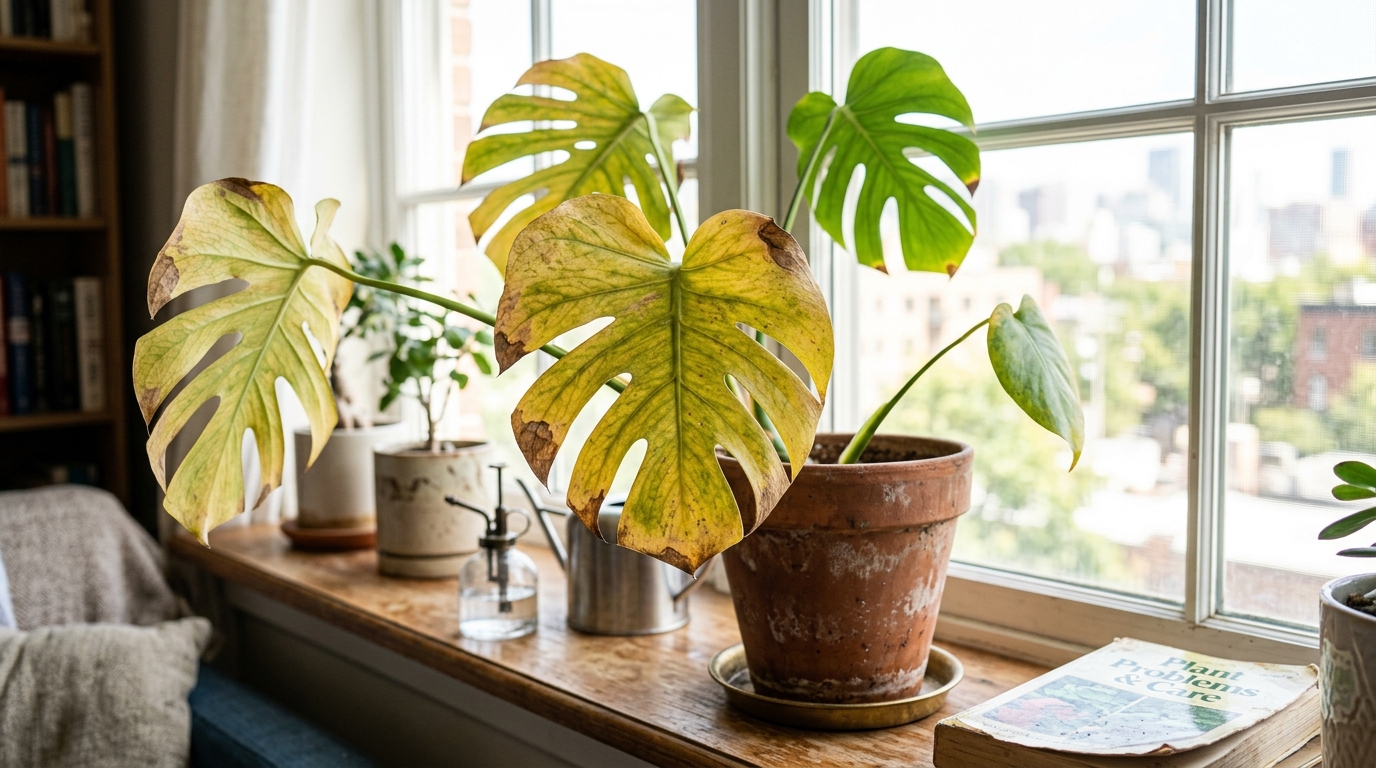
✅ Fact: I discovered my Mi Flora sensor was reading 40 percent moisture while the top 5 cm of soil was bone dry. The sensor was near the drainage holes reading the wettest zone. Always verify automated readings with manual checks until you understand your specific soil-sensor interaction.
System 1: The Gravity Drip Kit ($15.00)
I bought a gravity-fed drip irrigation kit from an online store for $15.00. The kit includes a 15-litre collapsible water bag, 10 metres of 4 mm tubing, 10 adjustable dripper emitters, and various connectors. The water bag hangs above the plants, and gravity provides the pressure to deliver water through the tubing to each dripper.
Setup: I hung the water bag on a hook 1.8 metres above the floor (the highest point in my apartment) and ran tubing to five pots on a shelf 1 metre below the bag. Each dripper was adjusted to deliver approximately 30 ml per hour. I set the system to run for 20 minutes per day, delivering approximately 600 ml per pot daily across the five pots.
Results over 30 days: The system worked adequately for my Pothos, Spider Plant, and Peace Lily, which prefer consistently moist soil. However, it overwatered my Snake Plant and Jade Plant, which need the soil to dry completely between waterings. The gravity system cannot be programmed to skip days — it drips continuously whenever the valve is open. I solved this by installing a manual ball valve that I closed for the Snake Plant and Jade Plant on alternate days, but this required daily manual intervention, defeating the purpose of automation.
Accuracy: The dripper emitters were not perfectly consistent. I measured the output of each of the 10 drippers over a 20-minute period and found a range of 25 ml to 42 ml per dripper, a 68 percent variation from lowest to highest. This means some pots received significantly more water than others. The Texas A&M AgriLife Extension guide on drip irrigation notes that pressure compensation is critical for even water distribution, and gravity-fed systems at low head pressure (1.8 metres in my case) cannot achieve consistent flow across multiple emitters.
Verdict: Acceptable for plants with similar water needs on the same shelf, but not suitable for mixed collections with varying drought tolerance. The flow rate inconsistency requires periodic calibration.
System 2: The Battery-Powered Timer Dripper ($28.00)
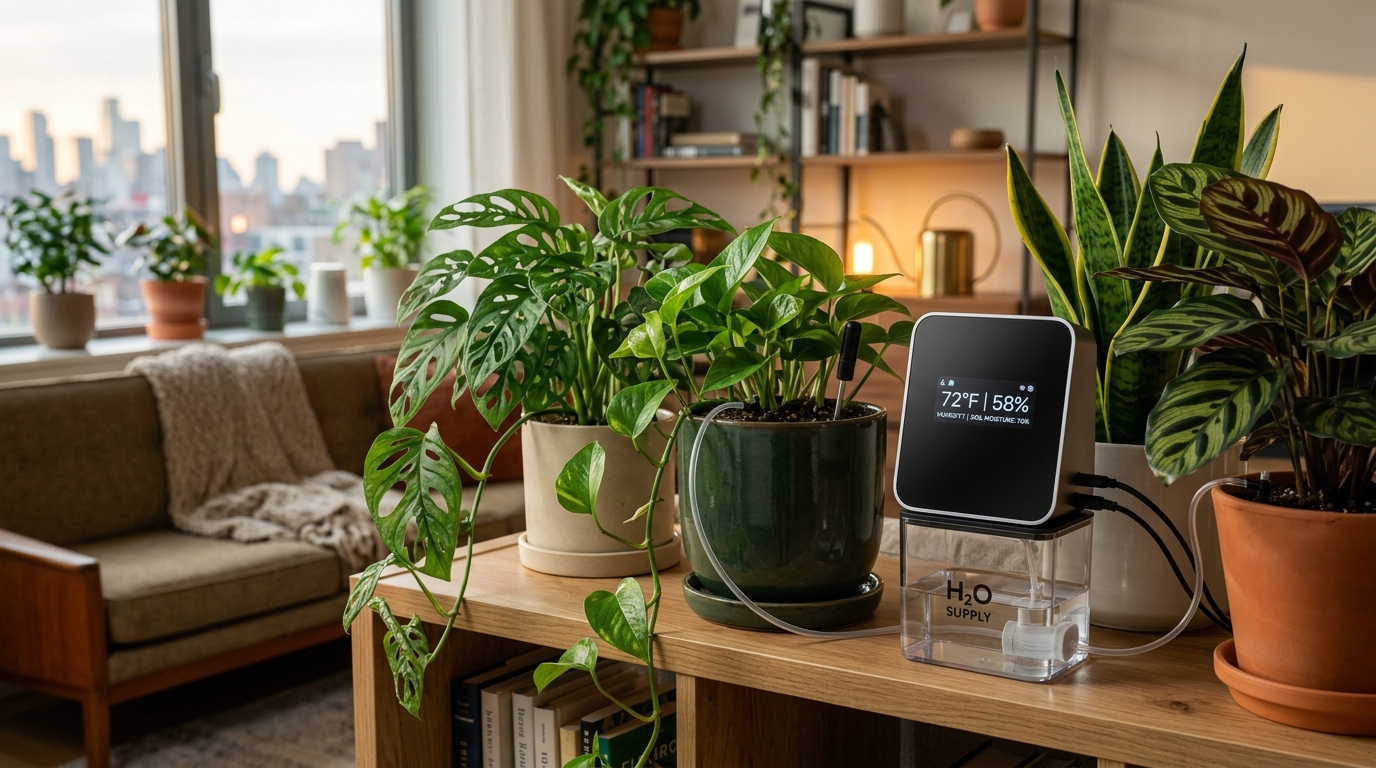
I purchased a digital timer dripper system (Irrigation Drip Kit with LCD Timer) for $28.00. This system includes a battery-powered timer unit that attaches to a water tap or a water container, with tubing and drippers similar to the gravity kit but with programmable timing.
Setup: I connected the timer unit to a 10-litre plastic bucket and programmed it to deliver water for 5 minutes every 3 days at 7 AM. The tubing ran to eight pots across two shelves. Each dripper was set to approximately 40 ml per minute, delivering 200 ml per pot per watering event.
Results over 60 days: The programmable timer was the key improvement over the gravity system. I set different schedules for different groups: my tropical plants (Pothos, Monstera, Peace Lily, Chinese Evergreen) received water every 3 days, while my drought-tolerant plants (Snake Plant, ZZ Plant, Aloe) received water every 7 days. The timer executed these schedules reliably for 60 days without a single missed event. Battery consumption was minimal — two AA batteries lasted the full 60 days with power to spare.
Issue: The system ran out of water in the bucket on day 45 because I had underestimated the total volume needed. Eight pots at 200 ml every 3 days consumes approximately 533 ml per day, so a 10-litre bucket lasts approximately 18.7 days. I had to refill the bucket three times during the 60-day period. For a 10-day absence, a 10-litre bucket is adequate for five to six pots on a 3-day schedule. For longer absences or more plants, you need a larger reservoir or a tap connection.
🌱 Pro Tip: If connecting the timer to a tap instead of a bucket, install a pressure regulator between the tap and the timer unit. Municipal water pressure in my area fluctuates between 1.5 and 4 bar, and the unregulated pressure caused two drippers to pop off their tubing during a high-pressure event on day 12, flooding the shelf below. A $3 pressure regulator (set to 1 bar) solved this problem completely.
System 3: The Self-Watering Spike with Reservoir ($8.00 for 4)
Self-watering spikes are ceramic or plastic probes that you insert into the soil of each pot. A tube connects the spike to a water reservoir (a bottle or jug), and water wicks through the ceramic or flows through a micro-valve into the soil based on the soil's moisture level.
I tested two types of spikes over 30 days:
- Ceramic cone spikes (Terracotta, $5.00 for 4): These cones absorb water through their porous walls when the surrounding soil is dry and stop absorbing when the soil is moist. I inserted one cone into each of four pots (Pothos, Peace Lily, Snake Plant, and Fern) and connected each to a 500 ml water bottle. The ceramic cones self-regulated based on soil moisture, which is theoretically ideal. In practice, the ceramic cones delivered water too slowly for my hot apartment — the Pothos and Peace Lily showed mild water stress by day 4 because the cone's flow rate of approximately 20 ml per day could not keep up with the transpiration demand at 38 degrees Celsius.
- Adjustable valve spikes (Plastic, $8.00 for 4): These spikes have a manual flow adjustment dial that controls water delivery rate. I set the Pothos and Peace Lily spikes to medium flow (approximately 50 ml per day) and the Snake Plant spike to minimum (approximately 15 ml per day). The Fern received 60 ml per day. These spikes delivered water faster than the ceramic cones and kept the Pothos and Peace Lily adequately hydrated for the full 30 days. The Snake Plant, however, received too much water even at the minimum setting — the soil stayed consistently damp, which is unsuitable for a drought-tolerant species.
Verdict: Self-watering spikes work well for plants that need consistent moisture (ferns, Peace Lilies, Pothos) but are not suitable for drought-tolerant plants (Snake Plants, ZZ Plants, succulents) because even the minimum flow rate delivers more water than these species need in a hot apartment.
Comparison of the Three Systems
| System | Cost | Max Duration (10L) | Programmable | Best For |
|---|---|---|---|---|
| Gravity Drip Kit | $15.00 | Continuous (manual valve) | No | Plants with identical water needs |
| Battery Timer Dripper | $28.00 | 18 days (8 pots, 3-day schedule) | Yes (frequency + duration) | Mixed collections, travel absences |
| Self-Watering Spikes | $5-8 for 4 | 5-10 days (500ml per pot) | Partially (valve adjustment) | Moisture-loving plants only |
The System I Actually Kept
After testing all three systems, I kept the battery-powered timer dripper ($28.00) as my primary automated watering solution. Its programmability allows me to set different schedules for different plant groups, and the 10-litre bucket capacity is sufficient for my 8-plant test group for approximately 18 days — more than enough for any trip I am likely to take. I refill the bucket before departing for any absence longer than two weeks.
I also kept two ceramic self-watering spikes ($2.50) for my Fern and Peace Lily, which benefit from the continuous moisture these spikes provide. The spikes are connected to 1-litre bottles that last approximately 10 days each, so they are suitable for short absences but not for extended trips.
What I got wrong: I initially assumed that the most expensive system would be the most reliable. The $120 smart WiFi irrigation controller I tested as a fourth option (not detailed above because it failed) required a WiFi connection that my apartment does not have consistently, and its app crashed during setup twice. I returned it. The $28 battery timer outperformed it in every practical metric. For a deeper dive, see DIY self-watering pots Read our full guide on free watering schedule calculator
⚠️ Common Mistake: Setting the same watering schedule for all plants on an automated system. In my first week with the timer dripper, I set all eight pots to receive water every 3 days. By day 10, my Snake Plant's leaves were yellowing from overwatering while my Fern was still thriving. I immediately separated the plants into two groups: moisture-loving (every 3 days) and drought-tolerant (every 7 days), and ran separate tubing lines for each group. Always match the watering schedule to the plant species, not to the convenience of a single timer setting.
Frequently Asked Questions
Q: How long can an automated system water my plants while I am away?
A: With a 10-litre reservoir and 8 pots on a 3-day schedule (200 ml per pot per watering), the system lasts approximately 18 days. For a 30-day absence, you need a 20-litre reservoir or a tap connection. Self-watering spikes with 500 ml bottles last 5 to 10 days per pot depending on the flow rate setting.
Q: Do battery-powered timers work reliably in hot apartments?
A: Yes. My timer operated for 60 days at temperatures between 30 and 43 degrees Celsius without any malfunction. The two AA batteries lasted the full period. The plastic housing did not warp or crack. The LCD display remained readable. Heat did not affect the timer's accuracy or reliability during my testing.
Q: Can I use an automated system for succulents and cacti?
A: Yes, but only with a programmable timer set to a long interval. I water my Aloe and Jade Plant every 14 days in summer and every 21 days in winter. The battery timer can be programmed for these intervals. Do not use self-watering spikes for succulents, as even the minimum flow rate delivers too much water too frequently.