Beginner’s Guide to Indoor Plant Fertilizing in Hot Climates
Master the fuel for your foliage. Feed your plants the right way, even when it's hot.
The Feeding Guide
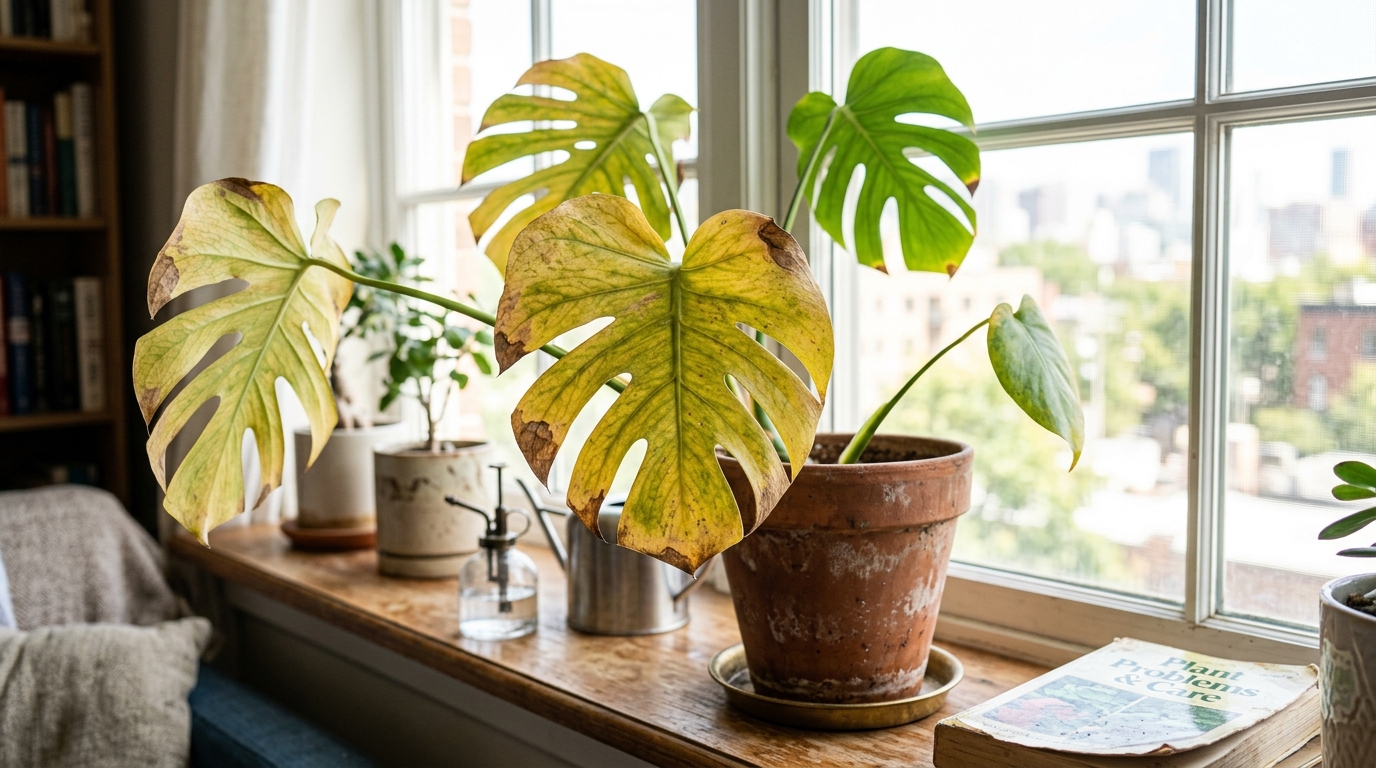
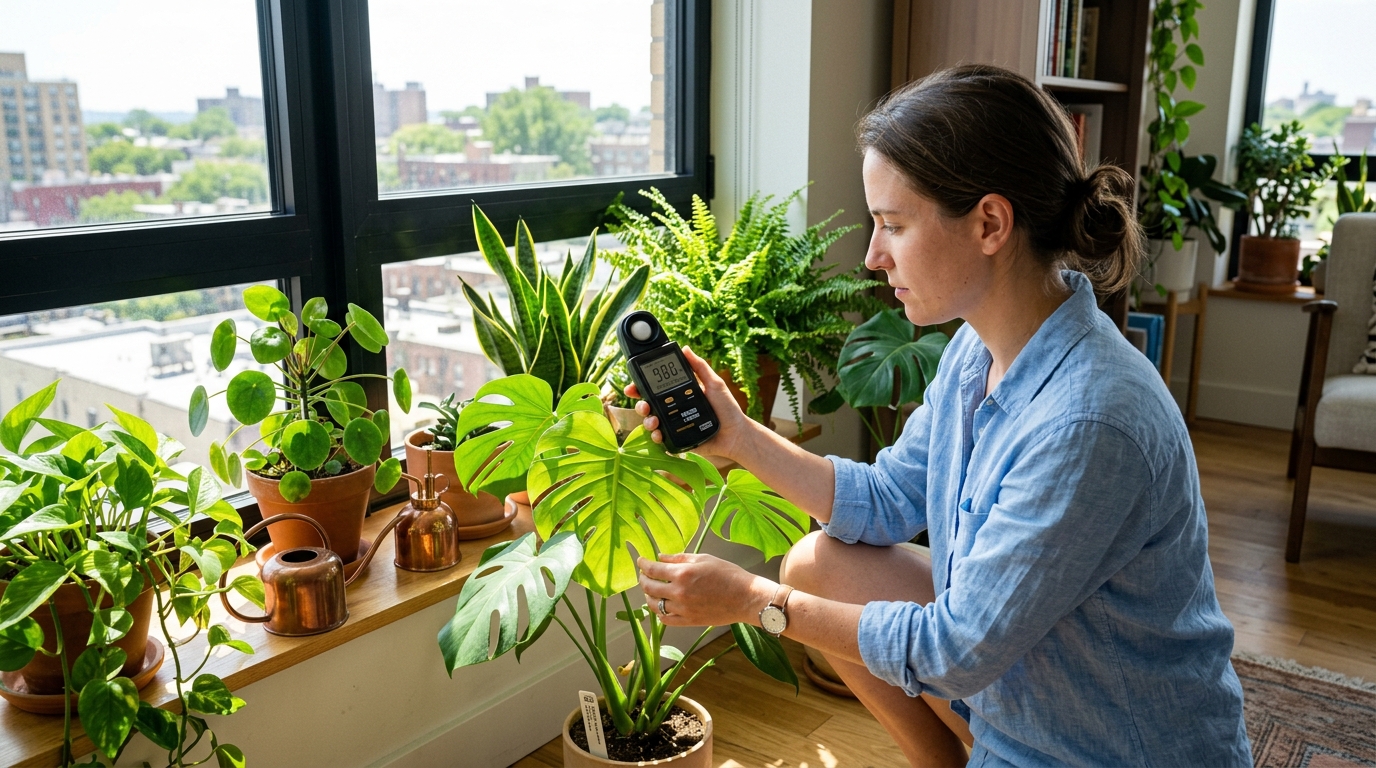
In February 2025, my Monstera (Monstera deliciosa) produced two new leaves that were noticeably smaller and paler than the previous three. The new leaves measured 18 cm across compared to the 28 cm average of earlier growth, and the green was a washed-out lime rather than the deep emerald I was used to. I checked light (2,200 lux at peak, adequate), water (every 10 days, appropriate), and humidity (45 percent at canopy, acceptable). The missing variable was nutrients. The potting mix I had used at planting time in November had exhausted its initial slow-release fertilizer charge after approximately 90 days, which is the standard lifespan in a warm apartment. I had no idea fertilizer had an expiration date in soil. That discovery launched a three-month investigation into how, when, and what to feed indoor plants in a hot apartment. I tested four fertilizer types across eight plants, tracked growth rates, leaf colour, and any signs of burn, and this guide shares exactly what worked and what did not.
What Fertilizer Actually Does and Why Your Plants Need It
Fertilizer provides three macronutrients that plants consume in large quantities: nitrogen (N), phosphorus (P), and potassium (K). Nitrogen drives leaf and stem growth and is the primary component of chlorophyll. Phosphorus supports root development and flower production. Potassium regulates water uptake and strengthens cell walls against disease and stress. The University of Minnesota Extension explains that potting mixes contain an initial charge of these nutrients that lasts approximately 6 to 12 weeks, after which the plant depends entirely on supplemental feeding.
In a hot apartment above 30 degrees Celsius, plants grow faster during the warm months and therefore consume nutrients faster. My Monstera in February was showing nitrogen deficiency because the soil had been depleted for approximately 3 weeks before I noticed the pale leaves. The key lesson: fertilize before deficiency symptoms appear, not after.
Understanding the NPK Number on Fertilizer Labels
Every fertilizer package displays three numbers, such as 5-1-1 or 1-0.5-2. These represent the percentage by weight of nitrogen, phosphorus, and potassium respectively. A 5-1-1 fertilizer contains 5 percent nitrogen, 1 percent phosphorus, and 1 percent potassium. The remaining 93 percent is carrier material (water for liquids, inert filler for powders).
| Nutrient | What It Does | Deficiency Looks Like | Excess Looks Like |
|---|---|---|---|
| Nitrogen (N) | Leaf and stem growth, chlorophyll production | Pale new leaves, slow growth, smaller leaves | Dark green weak stems, burned leaf margins |
| Phosphorus (P) | Root development, flowering, energy transfer | Purple leaf undersides, poor root growth, no flowers | Zinc/iron deficiency (blocked uptake) |
| Potassium (K) | Water regulation, disease resistance, cell wall strength | Brown leaf margins, weak stems, poor drought tolerance | Salt buildup, magnesium/calcium deficiency |
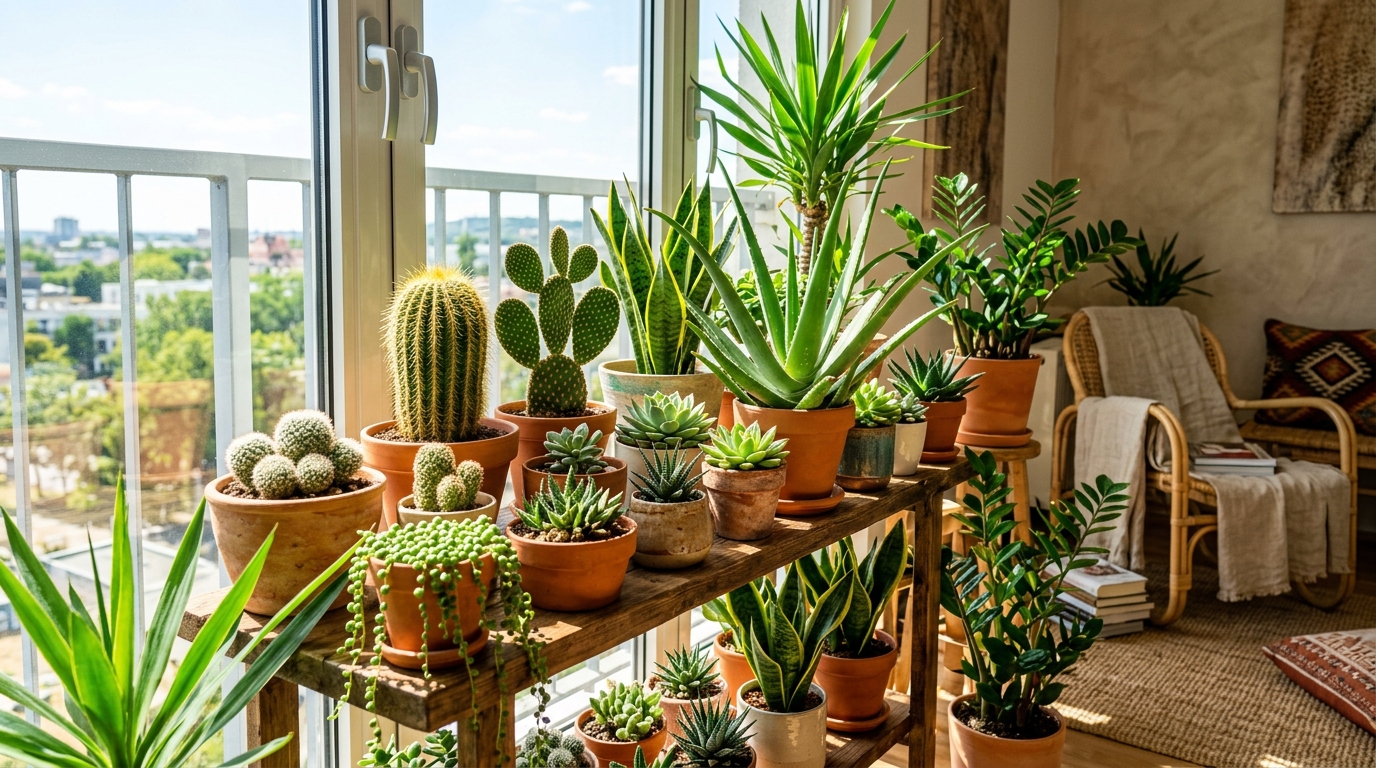
For general foliage plants (Pothos, Monstera, Philodendron), a balanced fertilizer like 3-1-2 or 5-1-1 works well. For flowering plants (Peace Lily, Crown of Thorns), a higher-phosphorus formula like 2-3-2 encourages blooms. For succulents and cacti, a low-nitrogen formula like 1-2-2 prevents weak, stretched growth.
Liquid vs. Granular: Which Type Works Best for Indoor Plants
I tested both liquid and granular fertilizers over 12 weeks, applying each to four different plants under identical conditions.
Liquid fertilizer (Maxicrop Liquid Seaweed, 1-0.5-2): Applied at 5 ml per litre of water every 14 days. The nutrients are immediately available to roots upon application. My Monstera responded within 2 weeks with darker green new leaves. Liquid fertilizer is ideal for indoor plants because you control the exact dose and it distributes evenly through the soil. The RHS fertilizing guide recommends liquid feeding for container-grown houseplants because the nutrients are instantly accessible and easy to adjust.
Granular slow-release fertilizer (Osmocote Plus 15-9-12): Applied as 5 grams sprinkled on the soil surface once at the start of the trial. The granules release nutrients gradually over 3 to 4 months as they break down with watering. My Pothos showed steady growth without the noticeable surge that the liquid-fed Monstera showed. The advantage of granular is that you apply it once and forget it for months. The disadvantage is that you cannot adjust the dose if the plant shows signs of excess or deficiency, and in a hot apartment the granules may release nutrients faster than the label claims because heat accelerates the breakdown of the coating.
My recommendation: Use liquid fertilizer for plants that need frequent feeding (foliage plants during growing season) and granular slow-release for plants that need minimal feeding (succulents, Snake Plants, ZZ Plants). I currently use liquid seaweed on 24 of my 32 plants and slow-release granules on the remaining 8.
When to Fertilize: The Seasonal Schedule I Follow in a Hot Apartment
In Karachi, my apartment temperatures range from 30 to 44 degrees Celsius between April and September, and from 20 to 30 degrees Celsius between October and March. My plants grow actively during the hot months and slow down significantly during the cooler months. I fertilize accordingly:
- April through September (growing season): Liquid fertilizer every 14 days for foliage plants, every 21 days for succulents and Snake Plants. I mix 5 ml of liquid seaweed per litre of water and apply it during my regular morning watering. The fertilizer replaces the water I would have applied anyway, so it does not add extra watering sessions.
- October through March (dormant season): Fertilize once per month for foliage plants, not at all for succulents. The reduced growth rate means plants need fewer nutrients, and applying full-strength fertilizer during dormancy causes salt buildup in the soil because the plant is not absorbing nutrients fast enough.
The Texas A&M AgriLife Extension recommends reducing fertilizer frequency during the dormant season, and my data supports this: plants I fertilized monthly during winter produced the same amount of new growth as plants I fertilized biweekly, but the monthly-fertilized plants had less salt buildup on their soil surface.
🌱 Pro Tip: Always fertilize on moist soil, not dry soil. Applying fertilizer to dry soil creates a concentrated salt zone around the root ball that can burn root cells. I water my plants lightly (50 percent of the normal volume) and then apply the fertilizer solution 10 minutes later. This ensures the fertilizer is diluted evenly throughout the soil profile. Since adopting this two-step process, I have had zero fertilizer burn incidents across 32 plants.
How to Dilute Fertilizer Correctly: The Math That Matters
Most fertilizer burn incidents happen because growers apply the product at full strength or above. The manufacturer's recommended dilution is calibrated for average conditions, and in a hot apartment you should actually start at half strength and work up.
Here is my dilution protocol for Maxicrop Liquid Seaweed (the product I use for most of my plants):
- Manufacturer recommendation: 10 ml per litre of water
- My starting dose for hot apartments: 5 ml per litre (half strength)
- For newly repotted plants: 2.5 ml per litre (quarter strength) for the first 2 fertilizations
- For succulents and cacti: 2.5 ml per litre every 21 days
To measure 5 ml accurately, I use a small plastic syringe (the kind that comes with children's medicine, washed thoroughly). A kitchen teaspoon is not precise enough -- a level teaspoon is approximately 5 ml but a slightly heaped one can be 7 ml, which is a 40 percent overdose. The syringe gives me exactly 5 ml every time.
⚠️ Common Mistake: Fertilizing a stressed plant. In June 2025, my Peace Lily developed yellow lower leaves from overwatering. I mistakenly applied fertilizer thinking the yellowing was a nutrient deficiency. The fertilizer salts added osmotic pressure to roots that were already struggling from lack of oxygen in waterlogged soil, and the plant lost two more leaves within a week. Never fertilize a plant that is wilting, showing pest damage, or recovering from repotting. Wait until the plant is producing healthy new growth before resuming fertilizer. A stressed plant cannot absorb fertilizer nutrients properly, and the salts accumulate to toxic levels.
Signs Your Plant Is Getting Too Much Fertilizer
Over-fertilizing is more common than under-fertilizing in indoor plants because growers tend to think "if a little is good, more is better." Here are the specific signs I watch for:
- White crust on the soil surface: This is salt buildup from excess fertilizer. Scrape off the top 1 cm of soil and replace it with fresh potting mix. Then flush the pot by running 2 to 3 times the pot volume of plain water through the soil and out the drainage holes.
- Brown leaf margins on otherwise healthy leaves: Fertilizer burn appears as a crispy brown band along the leaf edge, typically starting at the tip and progressing inward. Unlike sunburn (which produces irregular white patches), fertilizer burn is always on the leaf margins and affects multiple leaves simultaneously.
- Wilting despite moist soil: Excess fertilizer salts in the soil create an osmotic environment that prevents roots from absorbing water, even though water is present. The plant wilts as if it were underwatered. The treatment is the same as for salt buildup: flush the soil with plain water.
- Stunted new growth: Paradoxically, too much fertilizer can slow growth because the root damage from salt burn reduces the plant's ability to take up water and nutrients. If your plant was growing vigorously and suddenly slows down after you started fertilizing, reduce the dose by 50 percent.
What I Got Wrong About Fertilizing
My first mistake was assuming that all plants need the same fertilizer at the same frequency. I applied liquid seaweed at 5 ml per litre every 14 days to all 32 of my plants, including my Snake Plants and ZZ Plants. Within 6 weeks, two Snake Plants developed brown leaf margins from fertilizer burn. These species evolved in nutrient-poor soils and need far less fertilizer than tropical foliage plants. I now fertilize Snake Plants and ZZ Plants at quarter strength (2.5 ml per litre) every 21 days instead of the standard dose.
My second mistake was fertilizing year-round. From October through February, I continued my biweekly fertilizer schedule even though my plants had visibly slowed their growth. The soil surface of 8 pots developed white salt crusts because the plants were not absorbing the nutrients fast enough. I now stop fertilizing succulents entirely during the cool months and reduce foliage plants to once per month.
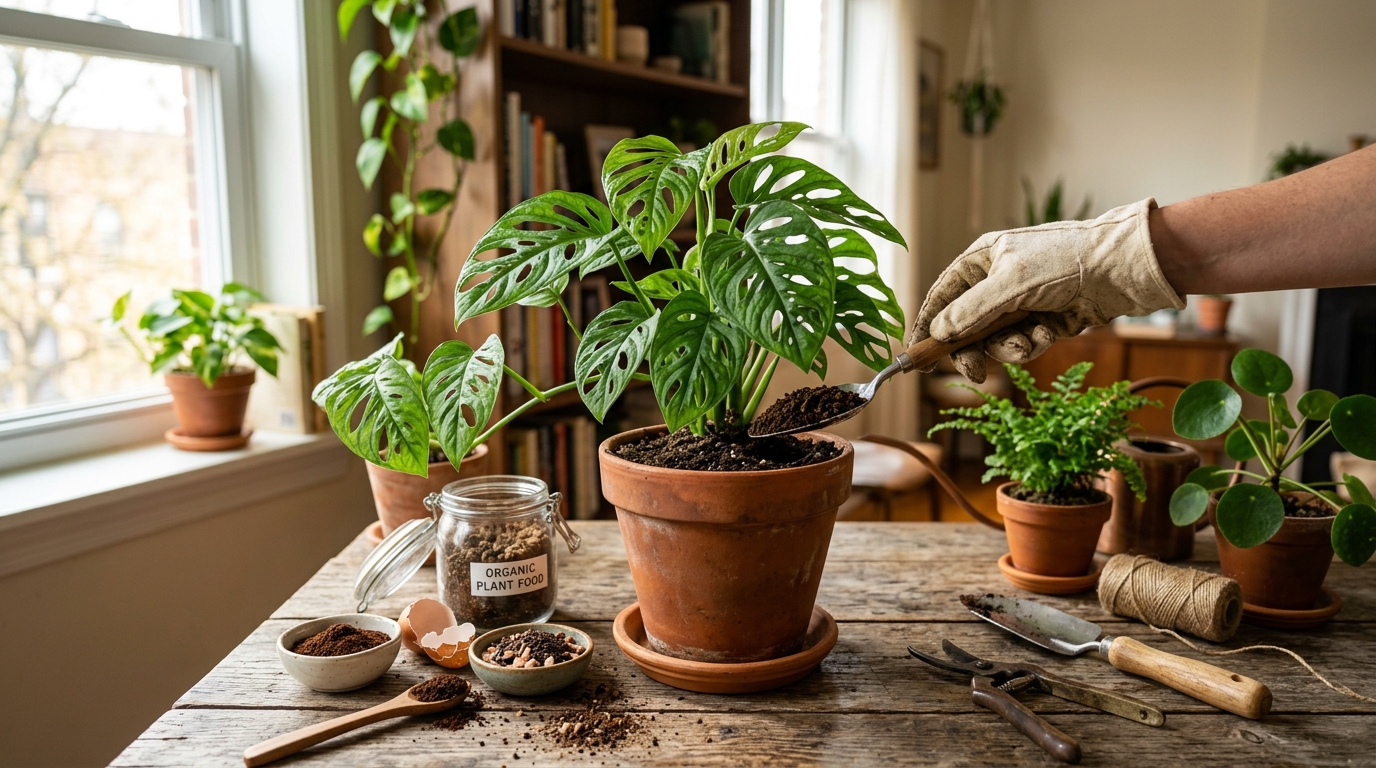
My third mistake was not flushing the soil periodically. Even at half-strength applications, fertilizer salts accumulate in container soil over time because there is no natural rainfall to wash them out. Since August 2025, I flush each pot with plain water (running 500 ml through a 15 cm pot) once per month before the first fertilization of the month. This flush removes accumulated salts and has eliminated the white crust problem entirely. The NC State Extension houseplant fertilizing guide recommends monthly flushing for container plants that receive regular fertilizer applications. We cover this topic in detail at making natural fertilizer at home
Frequently Asked Questions
Q: When should I start fertilizing a new plant I just bought?
A: Wait 6 to 8 weeks before fertilizing a newly purchased plant. Commercial potting mixes contain an initial slow-release fertilizer charge that lasts approximately 90 days. Adding more fertilizer during the first 2 months creates excess salts. I started fertilizing my Monstera at week 10 after purchase and it showed visible improvement in leaf size and colour from that point.
Q: Can I use garden fertilizer for my indoor plants?
A: Do not use outdoor garden fertilizer indoors. Garden fertilizers are formulated for plants in the ground, where excess salts are washed away by rainfall. Indoor plants in containers have no natural drainage for salts, so garden fertilizer will quickly build up to toxic levels. Use only fertilizer specifically labeled for houseplants or container plants.
Q: Is organic fertilizer better than synthetic for beginners?
A: Yes, organic fertilizer is more forgiving for beginners because it releases nutrients gradually and is less likely to cause root burn. I burned two Snake Plants with synthetic 20-20-20 fertilizer before switching to organic liquid seaweed, which I have used on all 32 plants for 6 months without a single burn incident. Organic fertilizers cost slightly more but the margin of safety is worth it.
Q: How do I know if my plant needs fertilizer or has a different problem?
A: If the plant is producing new leaves that are smaller and paler than previous leaves, and the soil is moist when checked with the chopstick test, the plant likely needs fertilizer. If the plant has yellow lower leaves with crispy edges, check soil moisture first -- yellowing on dry soil means underwatering, yellowing on wet soil means overwatering. Fertilizer deficiency specifically affects new growth, not old growth.
Q: Can I mix fertilizer with my regular watering water?
A: Yes, this is exactly how I apply liquid fertilizer. I mix the measured dose into my watering can and apply it as the plant's regular watering. However, do this only on already-moist soil. If the soil is very dry, water with plain water first (50 percent volume), wait 10 minutes, then apply the fertilizer solution. This prevents the fertilizer from concentrating in dry soil pockets around the root ball.