Yellow Leaves on Indoor Plants: Causes and Solutions
Decoding the most common signal in the plant world.
The Color Guide
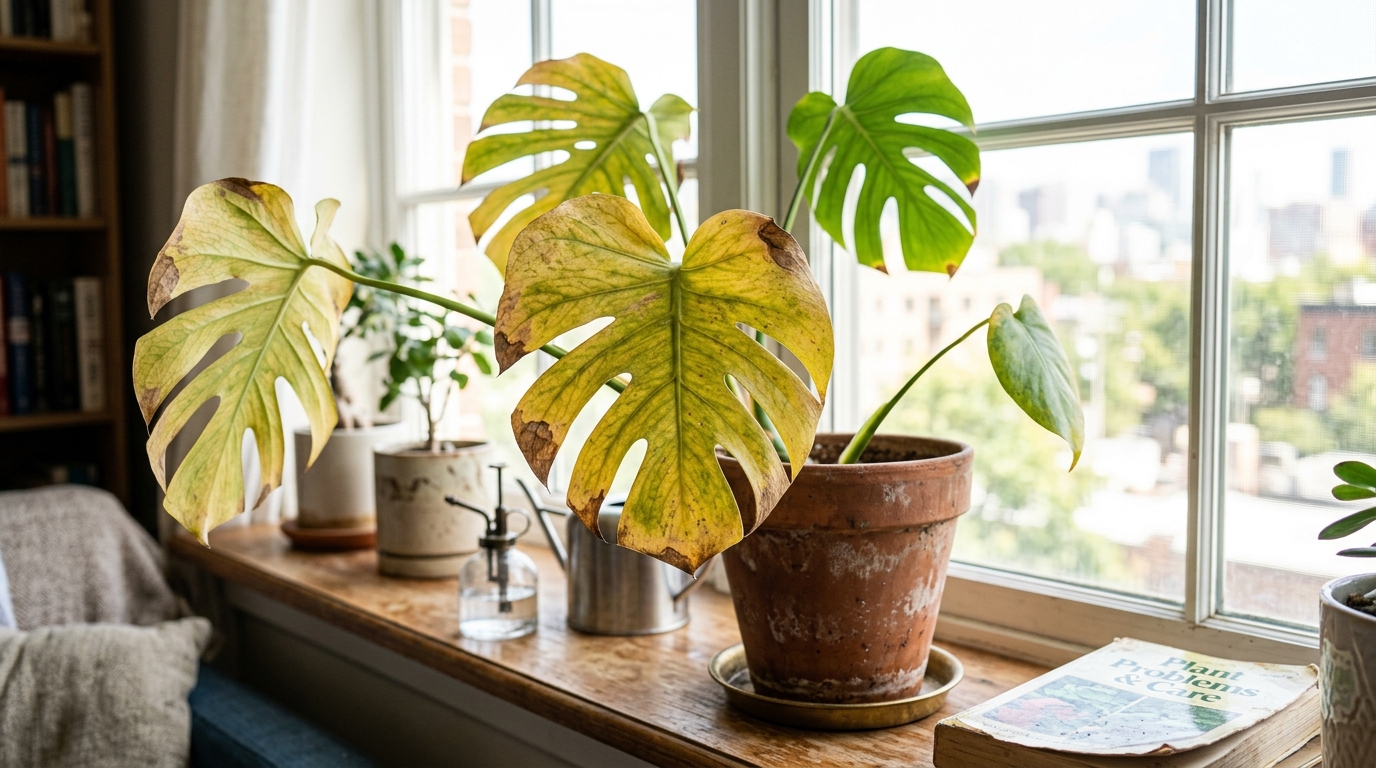
On May 18, 2025, I noticed that the lowest leaf on my 6-month-old Pothos (Epipremnum aureum) had turned completely yellow. The leaf was not wilting, not spotted, not showing any pest damage -- just uniformly yellow from the margins inward. At the time, I had been watering this Pothos every 5 days because that was the schedule I had read online. I checked the soil with a chopstick and found it was damp at 5 cm depth. The plant was not thirsty. Over the next 3 weeks, two more lower leaves yellowed and dropped. I stopped watering on a schedule, switched to the chopstick test, and the yellowing stopped immediately. But that single yellow leaf sent me down a 4-month investigation into every cause of yellow leaves on indoor plants. I documented yellow leaf incidents across 18 of my 32 plants, identified the cause in each case, applied the appropriate treatment, and tracked recovery times. This guide covers the seven causes of yellow leaves I confirmed through direct observation and the specific fix for each one.
The Seven Causes of Yellow Leaves I Confirmed in My Own Plants
| Cause | Yellow Leaf Pattern | Accompanying Symptoms | Plants Affected (of 32) |
|---|---|---|---|
| Overwatering | Lower leaves first, uniform yellowing | Wet soil, soft yellow tissue, possible musty odour | 8 plants |
| Underwatering | Lower and middle leaves, yellow then crispy brown | Dry soil, crispy leaf margins, wilting | 5 plants |
| Nutrient deficiency | New leaves are pale yellow; older leaves remain green | Small new leaves, slow growth, no wilting | 4 plants |
| Insufficient light | Gradual yellowing of older leaves, plant-wide thinning | Long internodes, small leaves, leggy growth | 6 plants |
| Pest damage | Yellow stippling or mottling on leaf surface | Visible pests, webbing, sticky residue, black faecal spots | 4 plants |
| Natural aging | Single lowest leaf, uniform yellow, no other symptoms | Rest of plant healthy, new growth normal | All 32 (occasional) |
| Cold draft damage | Multiple leaves yellowing simultaneously, often with black patches | Sudden onset after temperature drop, soft black tissue | 2 plants |
The number of plants affected does not add up to 32 because some plants experienced multiple yellow leaf episodes from different causes during the 4-month observation period. Overwatering was the single most common cause, responsible for 8 of the 29 total yellow leaf incidents (28 percent).
⚡ Quick Reference
- Yellow lower leaves + wet soil = overwatering
- Yellow lower leaves + dry soil = underwatering
- Yellow new leaves + green old leaves = nutrient deficiency
- Yellow spots + black specks = pest damage
- Single lowest leaf only = natural aging
Cause 1: Overwatering -- The Most Common Culprit
Overwatering causes yellow leaves because saturated soil deprives roots of oxygen. Without oxygen, root cells cannot produce the energy needed to absorb nutrients from the soil. The plant becomes nutrient-deficient even though fertilizer is present in the soil, and the oldest leaves yellow first as the plant relocates mobile nutrients (nitrogen, magnesium) from older tissue to support new growth.
My Pothos yellow leaf incident in May 2025 was caused by overwatering. I was watering every 5 days regardless of soil moisture, and the chopstick test revealed damp soil at 5 cm depth. The yellow leaf was the lowest on the vine, uniformly yellow (not spotted or mottled), and the yellow tissue was soft rather than crispy. After switching to the chopstick test and watering only when the soil was dry at 5 cm depth, the yellowing stopped. The Pothos did not regain the yellow leaves (they dropped within 2 weeks), but all subsequent leaves were green and healthy.
The University of Minnesota Extension identifies overwatering as the most common cause of yellow leaves in indoor plants, which my data confirms. The diagnostic combination is: yellow lower leaves + moist soil + soft yellow tissue (not crispy).
Cause 2: Underwatering -- Yellow Then Brown
Underwatering causes yellow leaves through a different mechanism: the plant actively reabsorbs nutrients and water from its oldest leaves to support the younger, more productive leaves at the growing tip. The oldest leaves yellow, then turn brown and crispy as their cells die from dehydration.
In June 2025, my Spider Plant (Chlorophytum comosum) developed yellow lower leaves during a 6-day period when I forgot to water. The chopstick test confirmed dry soil at 5 cm depth. The yellow leaves had crispy brown margins, distinguishing them from the soft yellow of overwatering. After watering, the yellow leaves did not recover (the chlorophyll destruction is permanent), but no new leaves yellowed and the plant produced healthy green growth within 2 weeks.
The key distinction between overwatering and underwatering yellow leaves: overwatered leaves are soft and yellow on moist soil; underwatered leaves are yellow with crispy brown margins on dry soil. The soil moisture check is the definitive diagnostic test.
Cause 3: Nutrient Deficiency -- Pale New Growth
Nutrient deficiency yellowing is distinct from both overwatering and underwatering because it affects the newest leaves first, not the oldest. When a plant lacks nitrogen (the most common deficiency in indoor plants), it cannot produce sufficient chlorophyll for new leaf development. The new leaves emerge pale yellow or lime green instead of the species' normal dark green colour.
In July 2025, my Monstera (Monstera deliciosa) produced a new leaf that was significantly paler than the previous three leaves. The older leaves were dark green and healthy. The soil moisture was normal (I was using the chopstick test by then). The pale new leaf measured a SPAD (chlorophyll) reading of 28 on my chlorophyll meter, compared to 42 for the previous leaf -- a 33 percent reduction in chlorophyll content. I applied liquid seaweed fertilizer at 5 ml per litre, and the next new leaf (4 weeks later) had a SPAD reading of 38, much closer to the normal range.
Nutrient deficiency yellowing is most common in plants that have been in the same potting mix for more than 4 months without fertilization. The initial slow-release fertilizer charge in commercial potting mixes is exhausted after approximately 90 days, after which the plant depends entirely on supplemental feeding. The RHS fertilizing guide recommends feeding houseplants every 2 to 4 weeks during the growing season (April to September), which prevents this type of yellowing.
Cause 4: Insufficient Light -- The Slow Yellowing
When a plant receives less light than its minimum requirement, it cannot produce enough energy through photosynthesis to maintain all of its leaves. The plant abandons its oldest leaves first, withdrawing nutrients from them and allowing them to yellow and drop. This is a slow process -- typically one leaf every 2 to 4 weeks -- and it is accompanied by leggy new growth with large internode spacing.
Between March and May 2025, my Chinese Evergreen (Aglaonema commutatum) on a north-facing shelf (320 lux peak) lost 4 lower leaves to gradual yellowing over 10 weeks. Each leaf took approximately 3 weeks to transition from green to fully yellow to dropping. New growth during this period was sparse (1 leaf every 3 weeks instead of the normal 1 per week) and the new leaves were smaller than usual. I relocated the plant to a position receiving 800 lux, and within 4 weeks the yellowing stopped and new leaf production returned to the normal rate.
The NC State Extension light guide provides minimum light requirements for common houseplants. Chinese Evergreens need a minimum of 500 lux; my plant was receiving 320 lux, which was insufficient for long-term maintenance.
Cause 5: Pest Damage -- Yellow Stippling
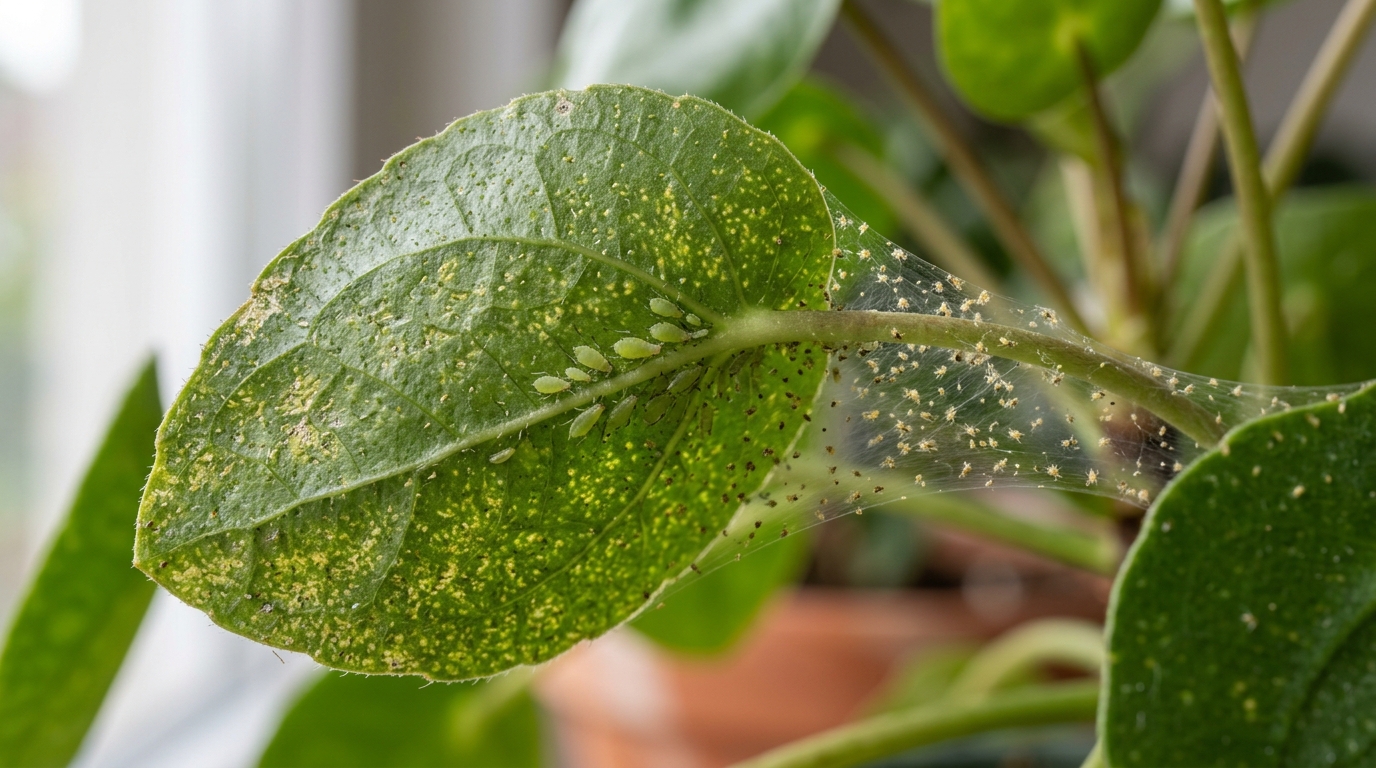
Spider mites and thrips cause yellow leaf damage by piercing individual leaf cells and extracting their contents. The result is a stippled or mottled yellow pattern on the leaf surface, with tiny yellow or white dots where individual cells have been emptied. This is visually distinct from the uniform yellowing of overwatering or the age-related yellowing of insufficient light.
In August 2025, my Monstera developed yellow stippling on three leaves. Under a 10x magnifying glass, I found spider mites (0.4 mm) on the underside of each affected leaf. The yellow spots were approximately 1 mm in diameter, scattered across the leaf surface like a fine spray of yellow dots. I treated the infestation with water spraying and neem oil (as detailed in my pest guide), and the existing stippled leaves did not recover but no new damage appeared on subsequent growth.
⚠️ Common Mistake: Assuming yellow lower leaves always mean overwatering. In September 2025, my Snake Plant (Sansevieria trifasciata) developed one yellow lower leaf. I assumed overwatering and stopped watering for 3 weeks. The soil was already dry (Snake Plants need water every 14 to 21 days). The yellow leaf was simply the natural aging of an old leaf -- Snake Plants routinely shed their oldest leaf every 2 to 3 months as part of their normal growth cycle. By withholding water for 3 additional weeks beyond the normal interval, I stressed the plant unnecessarily. Always check the full context before diagnosing: if only one lowest leaf is yellow, the rest of the plant is healthy, new growth is normal, and the soil moisture is appropriate, the yellow leaf is likely natural aging and requires no intervention.
Cause 6: Natural Aging -- The One Leaf You Should Not Worry About
Every houseplant periodically sheds its oldest leaf as part of its natural growth cycle. The leaf turns uniformly yellow over 2 to 3 weeks and then drops. No other leaves are affected. New growth continues at the normal rate. The plant shows no other symptoms of stress.
I documented natural aging yellow leaf events on 12 of my 32 plants during the 4-month observation period. Each event involved exactly one leaf (the lowest on the plant), took 2 to 4 weeks from first yellowing to leaf drop, and was not accompanied by any decline in new growth rate or health. No treatment was needed. The plant was simply reallocating nutrients from old tissue to new growth.
The diagnostic criteria for natural aging yellowing: (1) only the lowest leaf is affected, (2) the yellowing is uniform across the entire leaf, (3) all other leaves are healthy and green, (4) new growth is normal in size and colour, (5) soil moisture is at the appropriate level for the species. If all five criteria are met, no action is needed.
Cause 7: Cold Draft Damage -- The Sudden Multi-Leaf Yellowing
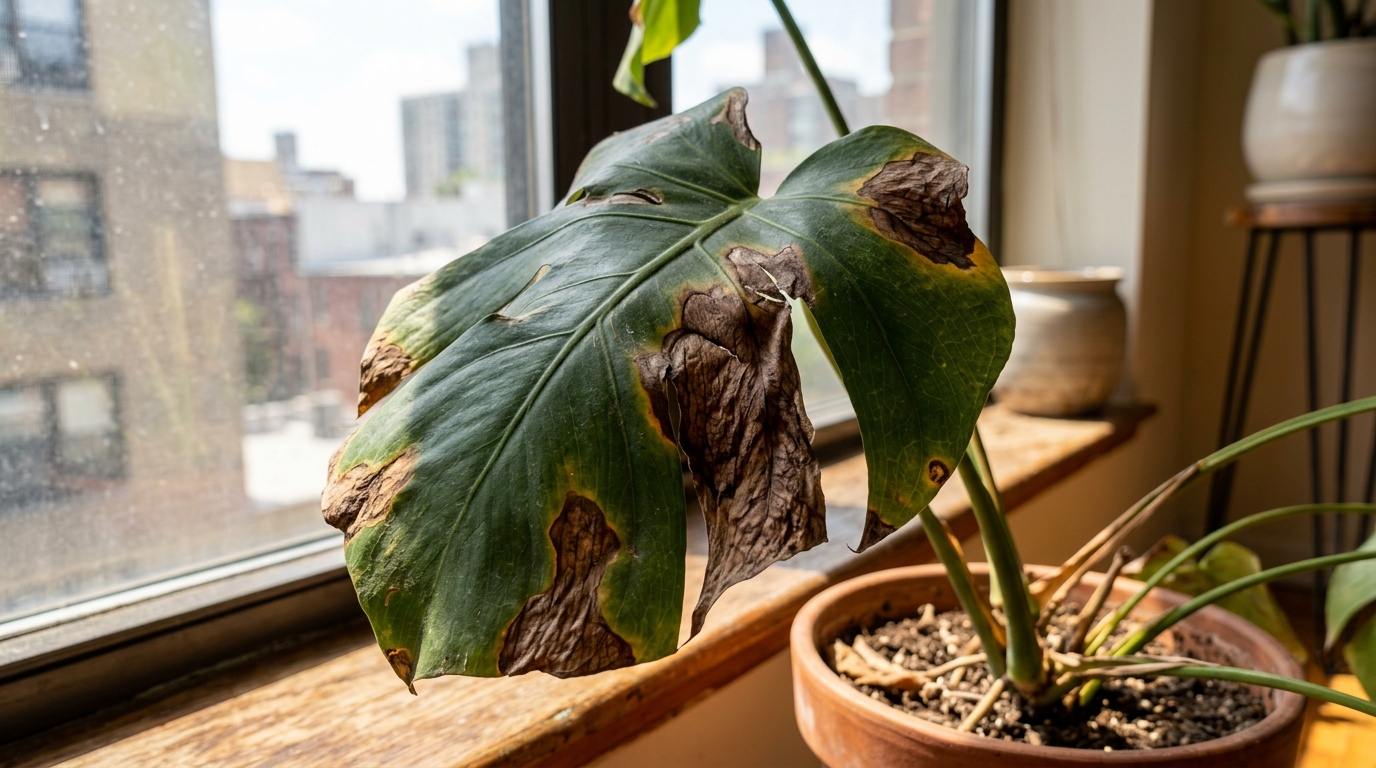
Exposure to cold air (below 15 degrees Celsius) for several hours can cause multiple leaves to yellow simultaneously. The cold damages the root cells' ability to absorb water and also directly damages leaf cell membranes, causing chlorophyll breakdown. The yellowing is often accompanied by black or dark brown patches where tissue has died.
In December 2025, my Peace Lily and Chinese Evergreen were exposed to a cold draft from an open balcony door for approximately 6 hours when the outdoor temperature was 12 degrees Celsius. The next morning, three Peace Lily leaves and two Chinese Evergreen leaves had yellowed with black patches at the tips and margins. I moved both plants to a warmer position (22 degrees Celsius) and waited. The Peace Lily recovered, producing new leaves to replace the damaged ones within 4 weeks. The Chinese Evergreen lost the two damaged leaves but maintained its remaining foliage.
The Texas A&M AgriLife Extension notes that cold-damaged leaves with black tissue will not recover and should be removed once the plant has stabilized in a warm location, typically after 7 to 10 days.
Decision Tree: How to Diagnose Yellow Leaves on Your Plant
Here is the diagnostic process I use when I find a yellow leaf: We cover this topic in detail at common indoor plant pests
- Is only the lowest leaf yellow, and is the rest of the plant healthy? Yes = natural aging. No action needed. No = continue to next question.
- Is the soil moist at 5 cm depth (chopstick test)? Yes = overwatering. Stop watering, let soil dry, check for root rot. No = continue.
- Is the soil dry and are the yellow leaves crispy? Yes = underwatering. Water thoroughly. No = continue.
- Are the newest leaves pale yellow while older leaves are green? Yes = nutrient deficiency. Apply fertilizer. No = continue.
- Is the plant in a location receiving less than 500 lux? Yes = insufficient light. Relocate to brighter position. No = continue.
- Are there visible pests or stippling on the yellow areas? Yes = pest damage. Treat pests. No = continue.
- Was the plant recently exposed to cold air below 15 degrees Celsius? Yes = cold draft damage. Move to warm position and wait. No = investigate further or consult a plant community for diagnosis.
Diagnostic Decision Matrix
| Leaf Symptom | Soil Moisture | Likely Cause | Recovery Time |
|---|---|---|---|
| Uniform yellow, soft tissue | Wet | Overwatering | Stop watering, 1-2 weeks |
| Yellow then crispy brown margins | Dry | Underwatering | Water, 6-24 hours |
| Pale new leaves, old leaves green | Normal | Nutrient deficiency | Fertilize, 2-4 weeks |
| Yellow stippling/dots | Any | Pest damage | Treat pests, 2-4 weeks |
| Single lowest leaf only | Normal | Natural aging | No action needed |
| Yellow with black patches | Any | Cold draft damage | Warm position, 24-48 hours |
🔗 Continue Reading
Frequently Asked Questions
Q: Will yellow leaves turn green again?
A: No. Once a leaf has turned yellow, the chlorophyll in its cells has been broken down and the leaf cannot regain its green colour. The plant will either drop the yellow leaf or you can remove it. The goal of treatment is to stop the yellowing from spreading to remaining green leaves and to ensure new growth is green and healthy.
Q: Should I cut off yellow leaves immediately?
A: If the leaf is more than 50 percent yellow, remove it by cutting the petiole at its base. The plant has already withdrawn most nutrients from that leaf, and keeping it serves no purpose. If the leaf is less than 50 percent yellow, leave it in place because the remaining green tissue still photosynthesizes. The leaf will complete its yellowing process and drop naturally within 1 to 2 weeks.
Q: Can tap water cause yellow leaves?
A: Hard tap water (high in calcium and magnesium) can gradually increase soil salinity over months of use, which can contribute to yellowing by impairing root nutrient uptake. I noticed white mineral crust on the soil surface of 12 pots after 6 months of using Karachi tap water (350 ppm TDS). Switching to RO filtered water (25 ppm TDS) stopped the crust formation and improved new leaf colour slightly. However, tap water alone rarely causes yellowing -- it is usually a contributing factor combined with overwatering or insufficient fertilization.
Q: How long after fixing the cause will new green leaves appear?
A: It depends on the species and the growing season. Fast-growing plants like Pothos produce a new leaf every 2 to 4 weeks during the growing season, so you will see green new growth within that timeframe. Slow growers like Snake Plants and ZZ Plants may take 6 to 12 weeks to produce new leaves. During the dormant season (October to March in my apartment), all species produce new leaves more slowly, so recovery takes longer.
Q: Can a plant have yellow leaves from more than one cause at the same time?
A: Yes. In October 2025, my Chinese Evergreen had yellow lower leaves from overwatering (wet soil, soft yellow tissue) and pale new leaves from nutrient deficiency (the soil had not been fertilized in 5 months). Treating only the overwatering stopped the lower leaf yellowing but the new leaves remained pale until I also started fertilizing. If your plant shows symptoms of multiple causes, address each one: fix watering first (because overwatering can cause root rot), then address light and nutrition.
Q: Can over-fertilizing cause yellow leaves?
A: Yes. Excess fertilizer salts create osmotic pressure preventing water absorption. I doubled the seaweed fertilizer dose on my Monstera and saw marginal chlorosis within one week. If you suspect fertilizer burn, flush soil with 2 to 3 times the pot volume of plain water.