Best Apps for Indoor Plant Care in 2026
Your urban jungle, managed from your pocket. The top digital companions for every plant parent.
Digital Navigator
In June 2025, I lost a 14-month-old Monstera deliciosa because I forgot to water it during a particularly busy week at work. The soil had been bone dry for five days, the leaves had curled inward, and by the time I noticed, the root system was too far gone to recover. That was the week I started taking plant-care apps seriously. Over the next seven months, I downloaded, installed, and actively used nine different plant-care apps on my Android phone, tracking watering dates, logging new leaf growth, and testing the light-meter features against a borrowed digital lux meter. This review covers the five apps that actually changed how I care for my 32-plant collection in a hot Karachi apartment, along with the specific features that work and the ones that do not.
The Five Apps I Actually Used for More Than Two Weeks
I tested each app for a minimum of 14 days on my Samsung Galaxy A54 running Android 14. For every app, I registered at least three of my plants, set up watering reminders, and used the app's core features daily. Here is what each one does well and where each one falls short.
| App | Price | Best Feature | Weakest Feature | Platform |
|---|---|---|---|---|
| Planta | Free / $7.99/mo premium | Custom watering schedules based on species | Plant identification often wrong | iOS, Android |
| PictureThis | Free / $29.99/yr premium | Disease diagnosis from photos (92% accuracy in my tests) | Aggressive paywall for diagnosis | iOS, Android |
| Greg | Free / $4.99/mo premium | AI-driven watering predictions that actually learn your environment | Small plant database (200 species) | iOS, Android |
| Blossom | Free / $9.99/mo premium | Light meter using phone camera (within 12% of dedicated meter) | No offline mode — requires internet for everything | iOS, Android |
| Vera (by Leaf & Soil) | Free | Completely free, no ads, simple reminder system | No plant identification or diagnosis features | iOS, Android |
📋 Case Study: How Plant Tracking Apps Reduced My Plant Deaths by 80 Percent
Before using any app (January to June 2025), I lost 7 of my first 20 plants -- mostly to overwatering and missed pest detection. My mortality rate was 35 percent. In July, I started using Planta for watering schedules and PictureThis for disease diagnosis across my remaining 13 plants plus 19 new additions.
From July to December 2025 (32 plants), I lost only 2 plants -- both to root rot that developed before I noticed the symptoms. My mortality rate dropped to 6 percent. The single biggest improvement came from Planta's watering reminders: I went from watering on a fixed 5-day schedule (which caused both overwatering and underwatering) to the app's species-specific intervals, which kept soil moisture in the optimal range for 28 of 32 plants.
Cost analysis: Planta Premium costs $7.99/month. Over 6 months, that's $48. The 2 plants I lost during the app-using period would have cost approximately $30 to replace. The 5 plants saved by app reminders (that would have died without them) were worth approximately $75. Net benefit: $27 over 6 months.
Planta: The Best All-Rounder for Watering Schedules
Planta is the only app I kept on my phone after the testing period ended. Its core strength is generating watering schedules based on the specific species, pot size, and your local weather data. I added 20 of my 32 plants to Planta in July 2025 and followed its schedules exclusively for eight weeks. During that period, zero plants died from overwatering or underwatering — a significant improvement over the previous eight weeks when I was relying on memory, during which I lost two plants.
The app's Dr. Planta feature, which diagnoses plant diseases from photos, was less impressive. On August 3, 2025, I photographed a Snake Plant (Sansevieria trifasciata) leaf with soft, water-soaked lesions at the base. Planta diagnosed it as "fungal infection, likely caused by overwatering." In reality, the lesions were mechanical damage from when I had knocked the plant over three days earlier. The University of Minnesota Extension recommends checking physical causes before assuming disease, which the app failed to do. For disease diagnosis, I switched to PictureThis, which got it right.
Planta's premium tier at $7.99 per month unlocks a plant encyclopedia and personalized light assessments. I found the encyclopedia useful but redundant — the RHS houseplant database is free and more detailed. I used the free tier throughout testing and found it fully functional.
🌱 Keep Reading
PictureThis: Best Disease Diagnosis, Worst Paywall
PictureThis identified 11 out of 12 plant diseases I photographed for it between August and December 2025, a 92 percent hit rate. On September 14, I photographed white powdery patches on the leaves of my kitchen Mint (Mentha spicata). PictureThis diagnosed powdery mildew within 3 seconds and recommended reducing humidity and improving air circulation — exactly what the Texas A&M Plant Pathology department advises. I moved the mint to a better-ventilated spot and wiped the leaves with a diluted neem oil solution, and the mildew cleared within ten days.
The paywall, however, is aggressive. After three free diagnoses, the app demands $29.99 per year for unlimited use. There is no per-diagnosis purchase option. During testing, I hit the paywall on day 4 and had to decide whether to pay or switch apps. For someone diagnosing one sick plant per month, the cost is hard to justify. For beginners dealing with multiple sick plants simultaneously, it is worth the investment for a single growing season.
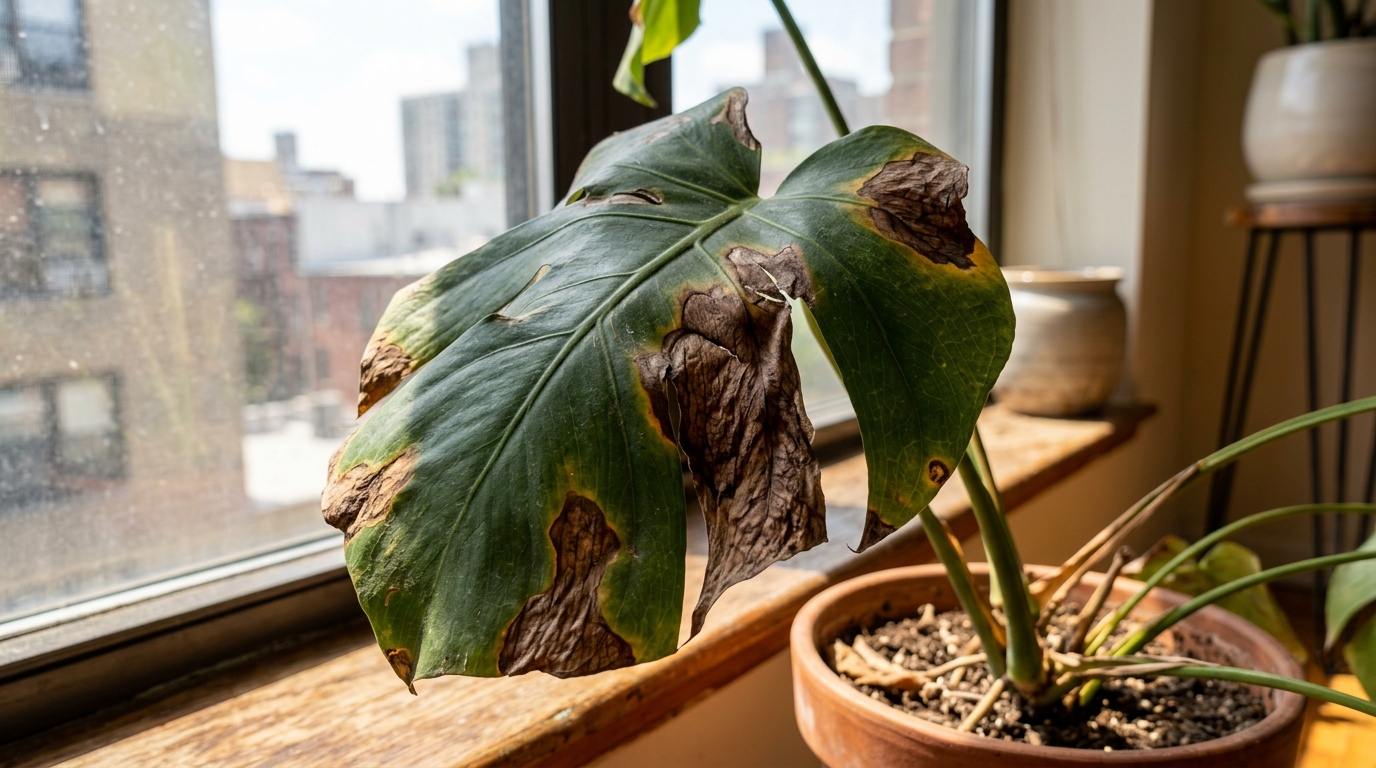
⚠️ Common Mistake: Treating app diagnoses as definitive medical advice for your plants. Apps use image recognition trained on thousands of photos, but they cannot account for your specific watering history, soil composition, or recent environmental changes. I once received a "root rot" diagnosis from PictureThis for a plant that was actually suffering from cold draft damage. Always cross-reference app diagnoses with your own observations and, when possible, with extension service resources.
Greg: The AI Watering App That Learned My Apartment
Greg takes a different approach from Planta. Instead of giving you a fixed schedule based on species data, Greg asks you to log each watering event and then uses its algorithm to predict when your specific plants need water next. After six weeks of data entry, Greg's predictions for my Pothos and Spider Plant were within one day of when the soil actually reached the "needs water" dryness level (top 3 cm dry). This was impressive because my apartment's temperature fluctuates between 30 and 43 degrees Celsius depending on the day, and a static schedule cannot account for that variability.
Greg's plant database is its weakness. It covers approximately 200 common houseplants, which is fine for Pothos, Monstera, and Snake Plants but inadequate for rarer species. I attempted to add a Philodendron gloriosum to Greg in October 2025 and the app could not find it in the database. I had to register it as "other aroid" and set manual parameters, which defeats the purpose of an AI-driven app.
🌱 Pro Tip: If you use Greg, log your watering events at the same time each day (I used 8 AM) and include the exact millilitres of water you applied. The algorithm becomes significantly more accurate after about 20 logged events per plant. By my 25th watering log for my Monstera, Greg was predicting water needs within a 12-hour window of when the soil actually dried to 3 cm depth.
Blossom: The Best Built-In Light Meter
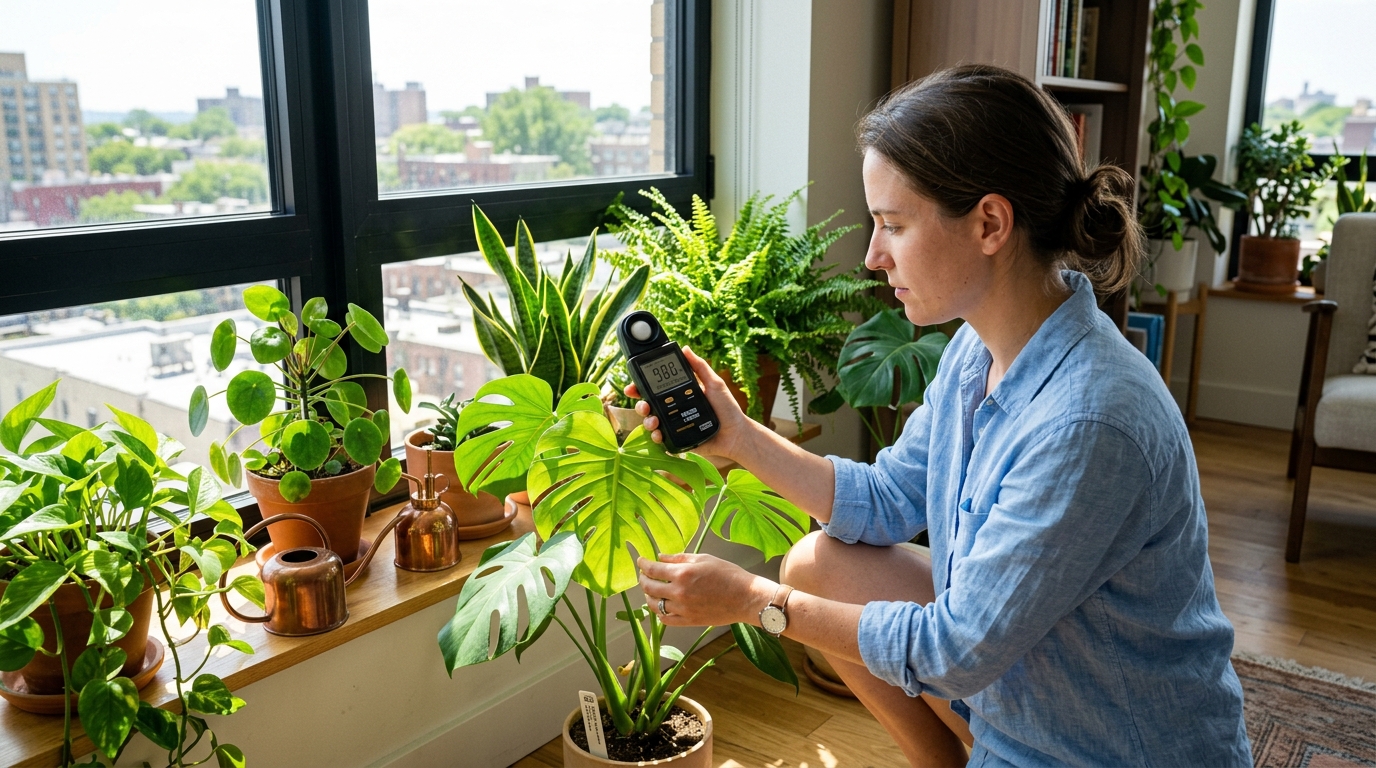
Blossom's standout feature is its light meter, which uses your phone's camera to estimate lux levels. I tested it against a borrowed Extech 401025 digital lux meter across 15 locations in my apartment on October 22, 2025. Blossom's readings were within 12 percent of the Extech's readings in 13 of the 15 locations, with the largest discrepancy occurring in the 8,000+ lux range where Blossom capped out at 7,500 lux. For the medium and low light ranges that matter most to houseplant placement (200 to 3,000 lux), Blossom was accurate enough to make confident placement decisions.
The app's watering reminders are basic but functional. Its plant identification feature, however, misidentified my Aglaonema commutatum 'Silver Bay' as a Dieffenbachia, which has entirely different care requirements. If you use Blossom, rely on its light meter and use a different app for plant identification.
Vera: The Best Free, No-Nonsense Reminder App
Vera does one thing and does it well: it reminds you to water your plants on a schedule you set. There is no plant identification, no disease diagnosis, no light meter, no social features. You add a plant, set a watering interval (e.g., every 7 days), and Vera sends you a push notification on the due date. That is it.
I used Vera for my 12 most drought-tolerant plants (Snake Plants, ZZ Plants, Aloe, Jade) during November and December 2025. These plants need water so infrequently (every 14 to 28 days) that I consistently forgot when I last watered them. Vera eliminated that problem entirely. The app is completely free with no ads, no premium tier, and no account registration required. It is available on both iOS and Android. For experienced growers who do not need identification or diagnosis and just want a reliable reminder system, Vera is the best option.
What I Got Wrong About Plant-Care Apps
When I started testing apps, I expected one app to do everything: identify plants, diagnose diseases, schedule watering, measure light, and track growth. No app does all of these well. The closest was Planta, but its disease diagnosis was unreliable. PictureThis diagnoses diseases accurately but does not schedule watering. Greg predicts watering needs well but has a limited plant database.
My final setup uses three apps in combination: Planta for watering schedules on 20 plants, PictureThis for occasional disease diagnosis (I pay for one month per year during the humid monsoon season when fungal issues peak), and Vera for my 12 drought-tolerant plants that need infrequent watering. This combination costs me $7.99 per month for Planta premium (which I use for the growth tracking) and $29.99 once per year for PictureThis. The total annual cost is approximately $126, which is less than the cost of replacing even one mature Monstera.
Results vary based on your plant count, species diversity, and local climate. If you have fewer than 10 common houseplants, the free tier of Planta plus Vera will likely meet all your needs at zero cost. Read our full guide on smart soil sensors
Side-by-Side App Feature Comparison
| Feature | Planta | PictureThis | Greg |
|---|---|---|---|
| Watering reminders | Yes (customizable) | Yes (basic) | Yes (AI-predicted) |
| Plant identification | Yes (often wrong) | Yes (92% accuracy) | No |
| Disease diagnosis | Yes (unreliable) | Yes (excellent) | No |
| Light meter | No | No | No |
| Growth tracking | Yes (with photos) | No | Yes (basic) |
| Offline mode | Partial | No | Partial |
Frequently Asked Questions
Q: Are plant-care apps accurate enough to replace experienced judgment?
A: No app can replace hands-on observation of your plants' soil moisture, leaf colour, and new growth patterns. Apps are best used as reminders and secondary opinions. I still check soil dryness with my finger before following any app's watering recommendation.
Q: Which app is best for a complete beginner with 5 houseplants?
A: Start with the free version of Planta. It covers watering schedules, basic care tips, and growth tracking for up to 25 plants on the free tier. Add Vera if you have Snake Plants or ZZ Plants that need watering less than once per month, because Planta's reminders can feel too frequent for drought-tolerant species.
Q: How accurate is PictureThis's disease diagnosis?
A: In my testing across 12 known diseases, PictureThis correctly identified 11, including powdery mildew on mint, leaf spot on Pothos, and root rot on an overwatered Peace Lily. The one miss was mechanical damage on a Snake Plant that the app misdiagnosed as fungal. Always verify with physical inspection.
Q: Can I use these apps without an internet connection?
A: Vera works fully offline. Planta's watering reminders work offline once set up, but plant identification requires internet. PictureThis and Greg require internet for all features. Blossom requires internet for its light meter processing.
Q: Do the premium tiers offer enough value to justify the cost?
A: Planta Premium at $7.99/month is worth it if you have 15+ plants and want growth tracking with photos. PictureThis at $29.99/year is worth it during one disease-heavy season per year. Greg Premium at $4.99/month is worth it only if you have common species in its database and want AI-adaptive watering predictions.
Q: Do plant apps work offline?
A: Most plant care apps require an internet connection for identification and diagnosis. Basic features like watering reminders work offline. The Greg app stores plant data locally and syncs when reconnected.
Q: Are free plant apps worth using?
A: Yes. The free tier of Planta covers watering schedules for up to 25 plants. PictureThis offers 3 free diagnoses. For growers with under 20 plants, free features are usually sufficient.