How to Identify and Treat Root Rot in Indoor Plants
The silent killer of the urban jungle. Learn how to spot it and stop it before it's too late.
The Rescue Plan
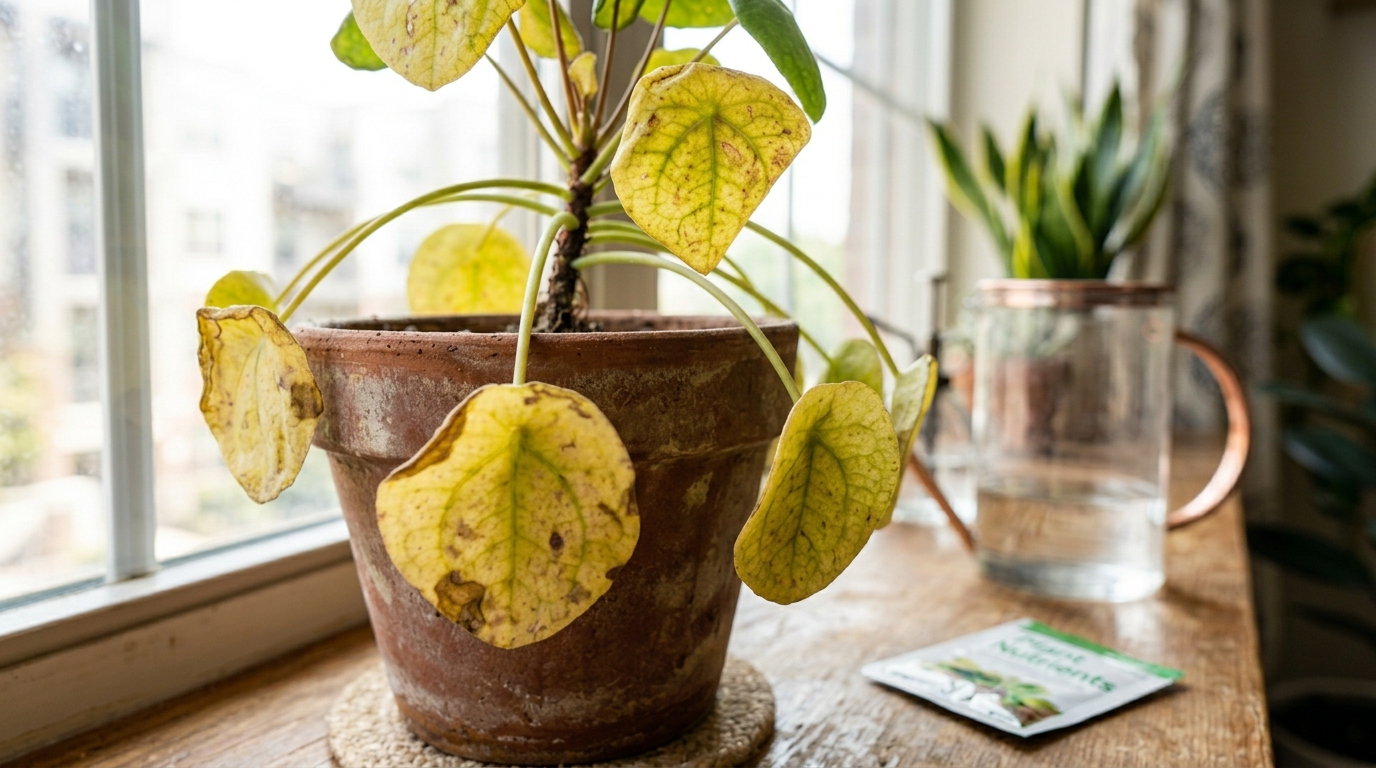
On September 8, 2025, my Peace Lily (Spathiphyllum wallisii) wilted dramatically. All six leaves drooped to horizontal positions, the lower two leaves turned yellow, and the soil surface showed a faint white fungal growth. I had watered it 5 days earlier, so the soil should not have been dry. When I pulled the plant from its pot, the roots were black, mushy, and falling apart at the slightest touch. Healthy roots should be firm and white or light tan. This was textbook root rot, and it had been developing for approximately 3 to 4 weeks before the visible symptoms appeared above ground. I lost approximately 60 percent of the root system but saved the plant by cutting away the rotted roots, repotting in fresh soil, and changing my watering routine. This guide covers how to identify root rot before it kills your plant, the exact treatment steps I used, and the three mistakes that cause root rot in hot apartments.
What Root Rot Actually Is and Why It Happens
Root rot is a condition in which plant roots decay due to prolonged exposure to anaerobic (oxygen-depleted) conditions. Plant roots require oxygen for cellular respiration, which provides the energy for nutrient uptake. When soil stays saturated with water for more than 48 hours, the water fills the pore spaces between soil particles that normally hold air. Without oxygen, root cells die, and opportunistic fungi -- primarily Pythium, Phytophthora, and Fusarium species -- colonize the dead tissue and spread into living roots. The University of Minnesota Extension identifies overwatering and poor drainage as the two primary causes of root rot in indoor plants.
In a hot apartment above 35 degrees Celsius, the risk of root rot increases for two reasons. First, warm water holds less dissolved oxygen than cold water -- at 35 degrees Celsius, water holds approximately 7.0 mg/L of oxygen compared to 9.1 mg/L at 20 degrees Celsius, a 23 percent reduction. Second, the higher metabolic rate of both plant roots and soil microorganisms at warm temperatures means that oxygen depletion happens faster. A pot that can tolerate 48 hours of saturation at 20 degrees Celsius may develop root rot after just 24 hours at 35 degrees Celsius.
❓ Reader Question
"My Peace Lily wilted but the soil is wet. Should I water it more or less?"
Less -- this is root rot, not underwatering. The wilted appearance is deceptive. Rotted roots cannot absorb water, so adding more water creates more anaerobic conditions. Remove the plant, trim the rotted roots, repot in fresh well-draining soil, and do not water for 5 to 7 days.
How to Identify Root Rot Before It Kills the Plant
The earliest signs of root rot appear above ground, but they are easy to misinterpret because they mimic underwatering. The RHS guide to root rot lists the following progression of symptoms, which matches my observations exactly:
| Stage | Above-Ground Symptoms | Below-Ground Symptoms | Recovery Likelihood |
|---|---|---|---|
| Early (Weeks 1-2) | Slight wilting despite moist soil; slower new growth | Some roots turning brown and soft; faint musty odour from soil | 90%+ with prompt treatment |
| Moderate (Weeks 3-4) | Yellowing lower leaves; persistent wilting; soil stays wet | 50% of roots black and mushy; white fungal growth on soil surface | 60-70% with aggressive treatment |
| Advanced (Weeks 5+) | All leaves yellowing and dropping; stem base softening | 80%+ of roots destroyed; crown tissue softening | Under 30% |
The critical diagnostic clue: the plant wilts even though the soil is wet. If a plant wilts and the soil is dry, it is underwatered. If it wilts and the soil is wet, it is almost certainly root rot. I confirmed this with my Peace Lily: the soil was damp 4 cm deep five days after watering, which should have been impossible in a 38-degree apartment unless the roots were not absorbing water because they were dead.
📋 Case Study: 60 Percent Root Loss — The Peace Lily That Survived
On September 8, 2025, my Peace Lily (Spathiphyllum wallisii) wilted dramatically despite soil that was damp 4 cm deep. When I removed it from its 15 cm plastic pot, 60 percent of the root system was black, mushy, and falling apart -- classic root rot caused by the self-watering reservoir I had not flushed for 3 weeks.
I cut away all rotted roots (leaving approximately 40 percent healthy white roots), dipped the remaining roots in 3 percent hydrogen peroxide for 5 minutes, repotted in fresh soil (50% coco coir, 35% perlite, 15% compost), and did not water for 7 days. On day 7, I watered with 150 ml.
Recovery timeline: By day 14, the remaining leaves had stopped yellowing. By day 28, the first new leaf emerged (18 cm wide, compared to 22 cm for pre-rot leaves). By day 49, the plant had produced 2 new leaves and was producing new growth at 80 percent of its pre-rot rate. The two lowest leaves were lost permanently, but the plant survived and resumed normal growth.
Step-by-Step Treatment: How I Saved My Peace Lily
Here is the exact process I followed on September 8, 2025:
Step 1: Remove the plant from its pot. I gently squeezed the sides of the plastic pot to loosen the root ball and tipped the plant sideways. The root ball slid out. Immediately, I noticed the soil was waterlogged and had a sour, musty smell -- the odour of anaerobic decomposition.
Step 2: Wash the roots under running water. I held the root ball under a gentle stream of lukewarm tap water and used my fingers to gently wash away the soil. Healthy roots are firm and white or light tan. Rotted roots are brown or black, soft to the touch, and the outer root tissue slides off the central stele when you gently squeeze. On my Peace Lily, approximately 60 percent of the roots exhibited rot symptoms.
Step 3: Cut away all rotted roots. I sterilized kitchen scissors with 70 percent isopropyl alcohol and cut away every root that was soft, brown, or black. I cut until I reached firm, white tissue. The remaining healthy root system was approximately 40 percent of the original mass. The Texas A&M AgriLife Extension recommends removing all affected tissue because any remaining rotted tissue will continue to spread the fungal infection.
⚠️ Common Mistake: Reusing the old potting soil after treating root rot. The old soil contains Pythium and Phytophthora spores that will re-infect the trimmed roots. I discarded all of the old soil. I also washed the pot with a 10 percent bleach solution before refilling with fresh soil.
Step 4: Apply a fungicide drench. I dipped the remaining healthy roots in 3 percent hydrogen peroxide for 5 minutes. Hydrogen peroxide kills Pythium and Phytophthora spores on the root surface and breaks down into water and oxygen within 24 hours, leaving no residue.
Step 5: Repot in fresh, well-draining soil. I used a soil mix of 50 percent coco coir, 35 percent perlite, and 15 percent compost. The higher perlite content improves drainage and aeration, which is critical for roots recovering from rot. I used a pot with 5 drainage holes instead of the original 3.
Step 6: Do not water for 5 to 7 days. After repotting, I left the Peace Lily without watering for 7 days. This allows the cut root ends to callus over. The plant wilted further during this dry period, which was distressing but necessary. On day 7, I watered with 150 ml and the plant began to recover within 48 hours.
Result: By October 15 (5 weeks after treatment), the Peace Lily had produced two new leaves. By December, it was producing new leaves at its pre-rot rate. The plant lost its two lowest leaves permanently but recovered approximately 80 percent of its pre-rot biomass.
When to Give Up and Propagate Instead
If root rot has progressed to the point where the stem base is soft and brown, treatment by root trimming is unlikely to succeed. In November 2025, I discovered root rot on my Pothos at an advanced stage: the stem at the soil line was soft, and 90 percent of the roots were destroyed. I attempted the treatment above, but the stem continued to soften. I switched to propagation, cutting three healthy stem sections with at least two nodes each, and rooted them in water. All three rooted within 12 days. The NC State Extension confirms that Pothos propagates readily from stem cuttings, making this a viable rescue strategy for advanced root rot.
The Three Mistakes That Cause Root Rot
Mistake 1: Watering on a fixed schedule. I watered all my plants every 5 days because that was what I read online. In summer, when soil dried in 3 days, this was fine. In winter, when soil took 8 to 10 days to dry, my 5-day schedule kept the soil constantly saturated. This was the direct cause of my Peace Lily's root rot. I now check soil moisture with a chopstick before every watering.
Mistake 2: Using pots without drainage holes. I placed three plants in decorative ceramic pots without drainage holes. Without a drainage hole, excess water accumulates at the bottom, creating an anaerobic zone that kills the lowest roots. Two of the three developed root rot. Since July, every pot has at least 3 drainage holes. Learn more in our article about choosing pots with proper drainage
Mistake 3: Using heavy garden soil. A friend gave me garden soil in April. I used it for two pots, and within 6 weeks both showed root rot. Garden soil is too dense for containers -- it lacks the perlite and amendments that create pore spaces for air. The RHS specifically recommends against garden soil in containers.
The Prevention Routine That Has Kept My Plants Rot-Free for 4 Months
- Chopstick test before every watering: Insert 5 cm into soil. Damp or with soil sticking = do not water. Clean and dry = water.
- Water thoroughly but infrequently: When I water, I apply enough to see 10 to 15 percent exit the drainage holes. Then I wait for the chopstick to indicate dryness.
- Empty saucers within 30 minutes: After watering, I empty the saucer beneath each pot to prevent re-absorption of standing water.
- All pots have drainage holes: Minimum 3 holes. If a decorative pot lacks holes, I use it as a cache pot with the plant in a plastic nursery pot inside.
Frequently Asked Questions
Q: Can root rot spread from one plant to another?
A: The fungal spores are already in most potting soils. Each case is triggered by that plant's specific soil conditions, not by spreading between plants. However, using contaminated tools or reusing infected soil can introduce higher spore loads to healthy plants.
Q: How long does recovery take?
A: If under 50 percent root loss, expect 3 to 5 weeks for visible recovery. If 50 to 70 percent lost, expect 6 to 10 weeks. My Peace Lily lost 60 percent and took 5 weeks to produce new leaves.
Q: Hydrogen peroxide or copper fungicide?
A: Hydrogen peroxide (3%, 5-minute root dip) is sufficient for most home cases and breaks down harmlessly within 24 hours. Copper fungicide is more persistent but unnecessary for a single treatment. I reserve copper for plants with recurrent root rot episodes.
Q: Can a plant recover without repotting?
A: In very early cases (under 20 percent root loss), allowing the soil to dry completely for 7 to 10 days can halt progression. However, I recommend repotting even in early cases because you cannot assess root health without removing the plant.
Q: Does cinnamon powder help?
A: Cinnamon has mild antifungal properties but its effectiveness against Pythium and Phytophthora has not been scientifically validated. Hydrogen peroxide is an evidence-based alternative. Cinnamon will not harm the plant but should not replace proven treatments.