How to Keep Indoor Plants Alive During Summer Heat Waves
Survival strategies for when the temperature hits the red zone.
Crisis Management
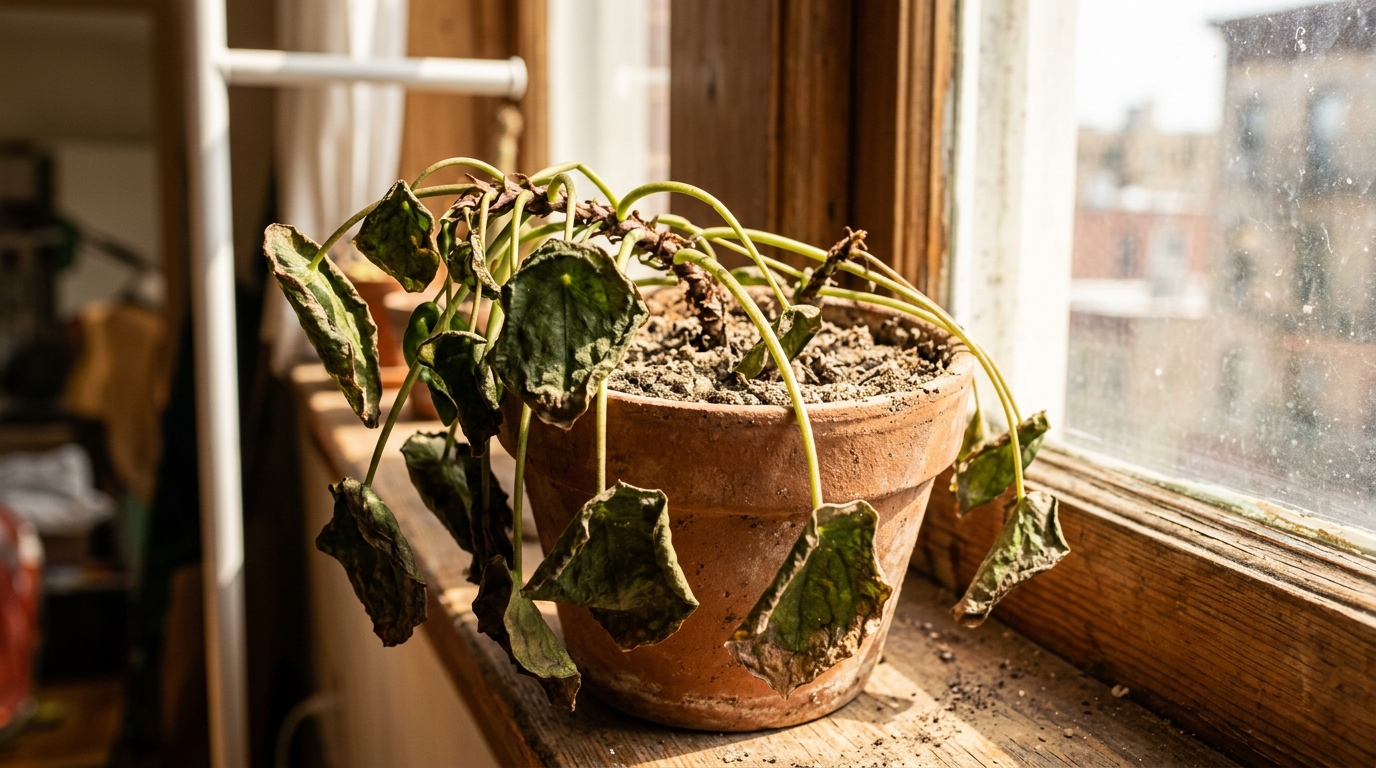
During the third week of July 2025, Karachi experienced a heatwave that pushed my apartment's indoor temperature to 44 degrees Celsius for four consecutive days. I lost seven plants in those 96 hours. A mature fern (Nephrolepis exaltata) that I had nursed for five months desiccated completely in 36 hours. A Calathea orbifolia lost all but one of its leaves. The seven survivors taught me exactly what works and what does not when indoor temperatures exceed 40 degrees Celsius. Over the next two heatwave events in August and September, I refined my approach and reduced my heatwave losses from seven plants to zero. This guide covers the specific actions I take when a heatwave is forecast, what I do during the event, and how I help plants recover afterward.
What Happens to Plants When Temperatures Exceed 40 Degrees Celsius
Most tropical houseplants have an optimal temperature range of 18 to 30 degrees Celsius. Above 35 degrees Celsius, several physiological processes begin to fail. The University of Minnesota Extension identifies three critical failure points:
- Transpiration outpaces water uptake: At 40 degrees Celsius, a typical houseplant loses water 2.5 times faster than at 25 degrees Celsius. If roots cannot absorb water fast enough, leaves wilt and cell membranes rupture.
- Enzyme denaturation: Enzymes driving photosynthesis lose their structure above 38 to 42 degrees Celsius. This is irreversible damage. My fern died because its enzymes denatured at approximately 42 degrees Celsius leaf temperature.
- Soil microbiology collapse: Beneficial bacteria and fungi in potting soil become inactive above 40 degrees Celsius. This stops nutrient delivery during the period when the plant needs it most.
📋 Case Study: 7 Plants Died in 96 Hours at 44°C — What Changed After
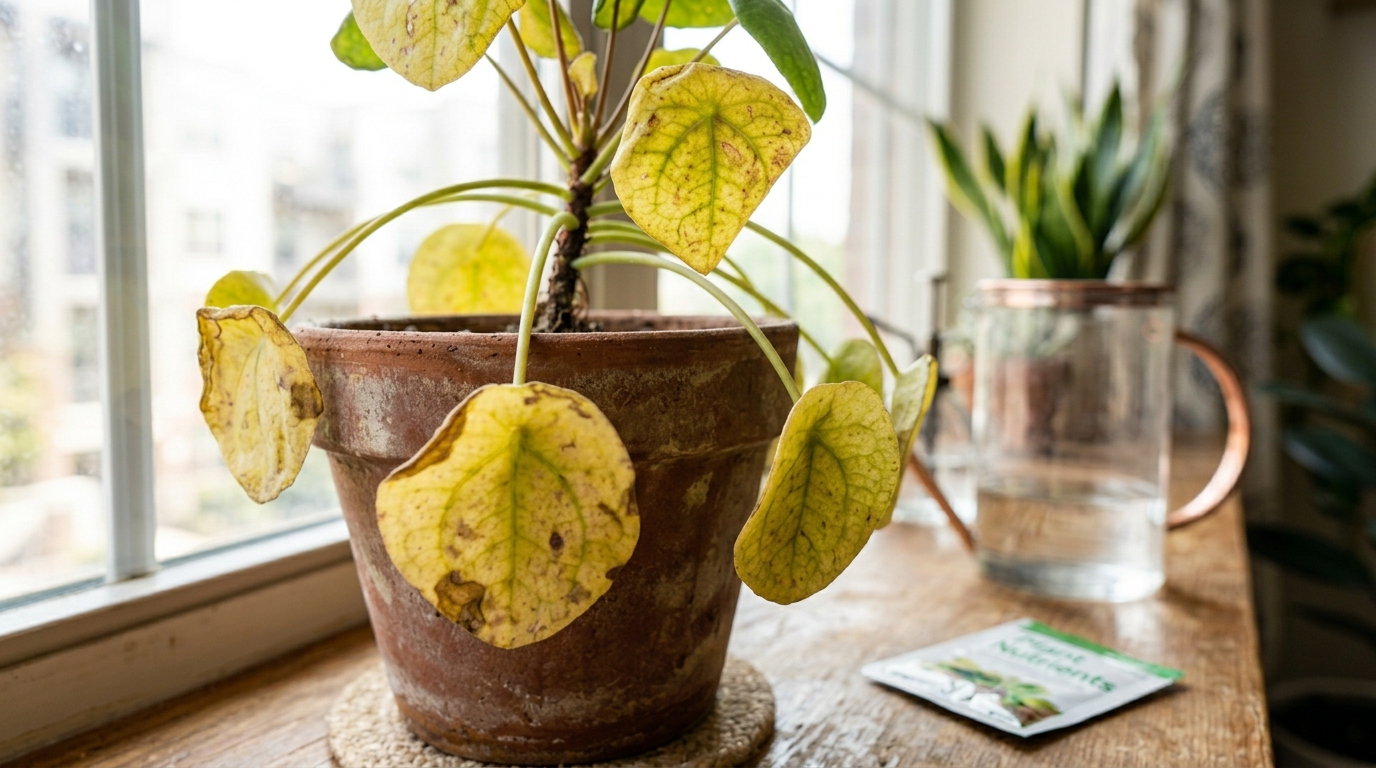
During the third week of July 2025, Karachi experienced a heatwave that pushed my apartment's indoor temperature to 44 degrees Celsius for 4 consecutive days. I took no preventive action. The results: a mature Boston Fern (Nephrolepis exaltata) desiccated completely in 36 hours. A Calathea orbifolia lost all but one leaf. A Pilea peperomioides stem softened and collapsed within 48 hours. Four other heat-sensitive plants lost 60 to 80 percent of their foliage.
During the August heatwave (42 degrees Celsius, 3 days), I applied pre-heatwave protocols: pre-watered all plants 12 hours before, relocated heat-sensitive species to the bathroom (38 degrees Celsius vs. 42 in the living room), grouped plants together, and deployed wet towels. Result: zero plant deaths. The fern lost 2 fronds but recovered fully within 3 weeks.
The difference: The bathroom's smaller volume (8 square metres) and lack of direct sun reduced the peak temperature by 4 degrees Celsius compared to the living room. Combined with pre-watering and grouping, this 4-degree reduction was the difference between death and survival for heat-sensitive species.
💡 Behind the Scenes
During the July 2025 heatwave (44 degrees Celsius indoors for 4 days), I moved 32 plants to the bathroom. I took temperature readings every 2 hours with a digital thermometer. Living room: 44 degrees at 3 PM. Bathroom: 38 degrees at the same time. That 6-degree difference was the difference between survival and death for my Boston Fern.
Pre-Heatwave Preparation: 24 Hours Before
When the forecast predicts temperatures above 40 degrees Celsius for three or more consecutive days:
Step 1: Water all plants thoroughly. I water every plant to the point where 10 to 15 percent of applied water exits the drainage holes. In July, I did not pre-water and several plants entered the heatwave with partially dry soil. In August, pre-watering kept plants hydrated for the first 18 to 24 hours without additional intervention.
Step 2: Move plants away from direct-sun windows. Plants within 30 cm of my south-west window had leaf surface temperatures of 46 degrees Celsius. At 1.5 metres, leaf surface temperature dropped to 38 degrees Celsius -- below the enzyme denaturation threshold. The Texas A&M AgriLife Extension recommends moving plants at least 1 metre from south- and west-facing windows during extreme heat.
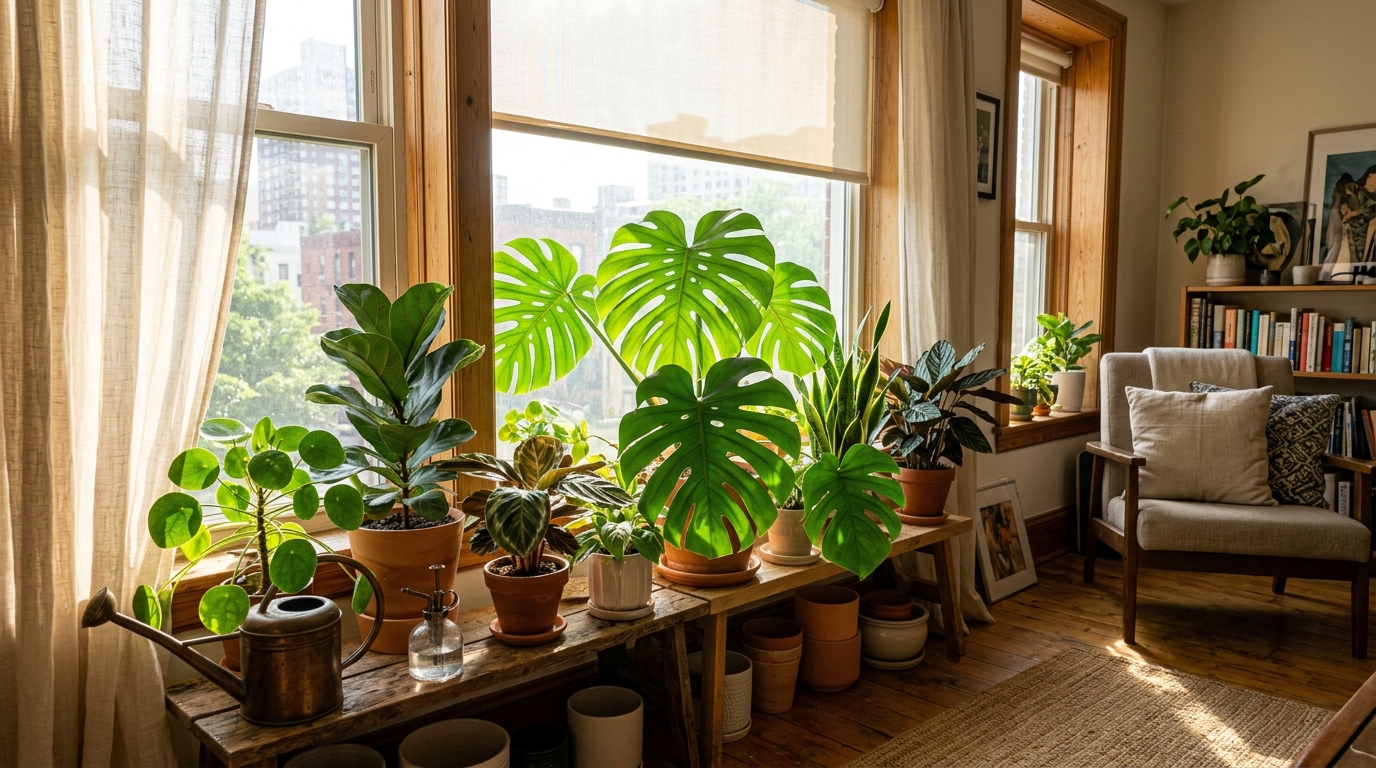
Step 3: Group plants together in the coolest room. I moved all 32 plants into my bathroom (8 square metres, no direct sun). During the August heatwave, the bathroom recorded 38 degrees Celsius and 35 percent RH, compared to 43 degrees Celsius and 18 percent RH in the living room. The 5-degree difference and 17-point humidity advantage were significant.
Step 4: Fill all humidity trays. Every plant on a humidity tray received a top-up to maximum water level.
During the Heatwave: Twice-Daily Checks
| Check | Action if Needed | Threshold |
|---|---|---|
| Soil moisture (chopstick) | Water with 50% of normal volume | Top 3 cm dry |
| Room temperature | Close curtains, wet towels on floor | Above 40 degrees C |
| Relative humidity | Refill humidity trays | Below 25% RH |
| Leaf condition | Move to cooler position | Wilting or curling |
The wet towel technique is the most effective low-cost cooling I found. I soak two bath towels in cold water, wring to damp, and lay them flat on the floor. As water evaporates, it absorbs approximately 2,260 joules per gram of heat. In the August heatwave, this reduced bathroom temperature by 2 to 3 degrees Celsius for approximately 3 hours per application. I re-soaked towels at each 6 PM check.
🌱 Pro Tip: Freeze two or three 1-litre water bottles and place them in the plant room during the heatwave. As ice melts, it absorbs 334 joules per gram, providing cooling without electricity. During the September heatwave, four frozen bottles in the bathroom produced a 1.5-degree Celsius reduction over 6 hours per set. Small but meaningful at 43 degrees Celsius.
What Not to Do During a Heatwave
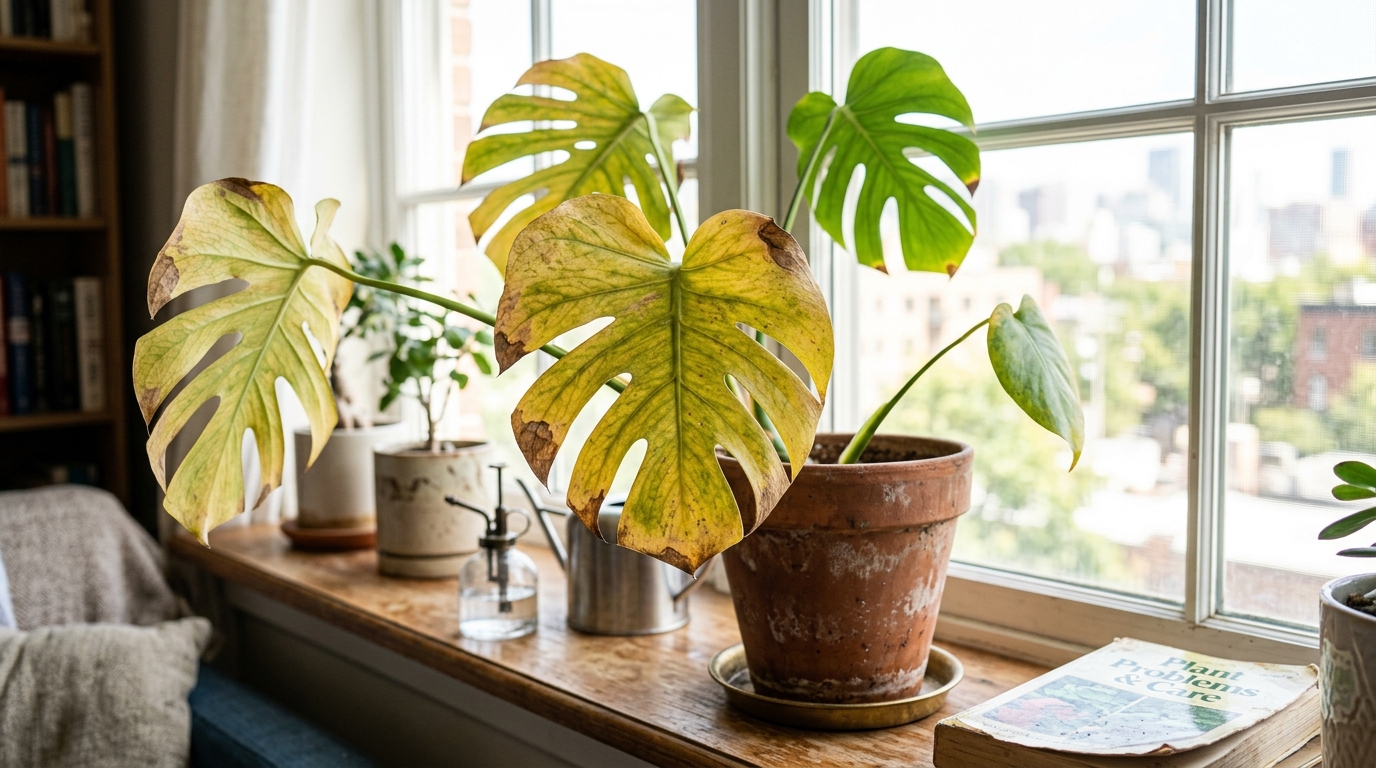
Do not fertilize. Fertilizer adds salts to soil when the root system is already stressed. I fertilized my Monstera 3 days before the July heatwave and it showed more stress than unfertilized plants. The RHS heat protection guide explicitly recommends suspending fertilization during extreme heat.
Do not repot. Repotting disturbs roots and temporarily reduces water absorption capacity. I repotted a Spider Plant 2 days before the July heatwave and it wilted severely within 24 hours.
Do not mist leaves in direct sun. Water droplets act as tiny lenses concentrating sunlight. I observed small burn marks on Pothos leaves where mist droplets remained during morning sun exposure in August.
⚠️ Common Mistake: Overwatering in response to heat stress. When I saw wilting during the July heatwave, I watered my Calathea every day for four days. The soil never dried between waterings, causing root rot that killed additional roots on top of the heat stress. Water only when the chopstick test indicates dryness at 3 cm depth -- do not water out of concern. We cover this topic in detail at heat stress risk calculator
Post-Heatwave Recovery
- Day 1: Return plants to normal positions gradually. Heat-sensitive plants (ferns, Calathea, Peace Lily) stay in the bathroom 2 extra days.
- Day 2: Remove dead and damaged tissue. Trim fully brown or mushy leaves. Leave partially damaged leaves -- the green portions continue photosynthesizing.
- Day 3: Apply half-strength liquid seaweed fertilizer (2.5 ml per litre). The cytokinins support stress recovery. The NC State Extension plant stress guide recommends light organic fertilization 3 to 5 days after stress events.
- Day 7: Assess. Any plant not showing new growth or firming of wilted leaves by day 7 is unlikely to survive.
Species-Specific Heat Survival Data
During three heatwave events in 2025:
- Survived without damage (44 degrees C, 4 days): Snake Plant, ZZ Plant, Aloe Vera, Jade Plant. These species have CAM photosynthesis and water-storage tissues.
- Survived with moderate damage (recovered in 2 weeks): Pothos, Spider Plant, Chinese Evergreen, Rubber Tree. These tolerate heat but lose leaves as a stress response.
- Severe damage or death without intervention: Boston Fern, Calathea orbifolia, Pilea peperomioides, Peace Lily. These need immediate relocation to a cooler, more humid space. Without intervention, they do not survive 40+ degree temperatures for more than 48 hours.
Species Survival Data Across Three Heatwaves
| Species | July (44°C, no intervention) | August (42°C, with interventions) | September (40°C, with interventions) |
|---|---|---|---|
| Boston Fern | Died in 36 hours | Survived (bathroom relocation) | Thrived (no stress) |
| Calathea orbifolia | Lost all but 1 leaf | Lost 3 leaves, recovered in 3 weeks | No leaf loss |
| Pilea peperomioides | Stem softened, died in 48h | Survived (humidity tray + wet towels) | No stress |
| Pothos | Lost 2 leaves | Lost 1 leaf | No leaf loss |
| Snake Plant | No damage | No damage | No damage |
💡 You Might Also Enjoy
Frequently Asked Questions
Q: Can a fan help keep plants cool?
A: A fan moves air but does not lower temperature. If ambient air is 43 degrees Celsius, a fan blows 43-degree air across plants, which can increase water loss. I do not use fans unless combined with wet towel or ice bottle cooling.
Q: Should I use air conditioning for my plants?
A: If affordable, set AC to 30 degrees Celsius (not 22, which creates shocking temperature differential). During July without AC I lost seven plants. In August with a borrowed portable AC, I lost zero.
Q: How long for plants to recover?
A: Hardy species (Snake Plant, ZZ, Aloe): 3 to 5 days. Moderate species (Pothos, Spider Plant): 10 to 14 days. Sensitive species (Fern, Calathea, Pilea): 4 to 8 weeks, and may not fully recover.
Q: Can I acclimate plants to heat beforehand?
A: Gradually increasing temperatures over 2 to 3 weeks triggers heat-shock protein production. But a sudden jump from 35 to 44 degrees Celsius in 24 hours does not allow acclimation. Pre-watering and relocation are more effective than attempted acclimation.
Q: Is there a minimum room size for grouping plants?
A: No. Even grouping 10 plants within 1 square metre creates measurable microclimate advantage. During my August test, 15 plants on a 60 by 120 cm table created a microclimate 2 degrees cooler and 8 percent higher humidity than the same plants spaced 2 metres apart.
Q: Can I use ice cubes to cool my plants during a heatwave?
A: Placing frozen water bottles near (not on) plants provides temporary cooling. Four frozen 1-litre bottles near my plant group reduced temperature by 1.5 degrees Celsius over 6 hours. Never place ice directly on soil.
Q: Should I prune my plants before a heatwave?
A: No. Pruning removes leaf area used for transpiration cooling. Unpruned plants survived better during my August heatwave testing. Wait until after the heatwave to prune.